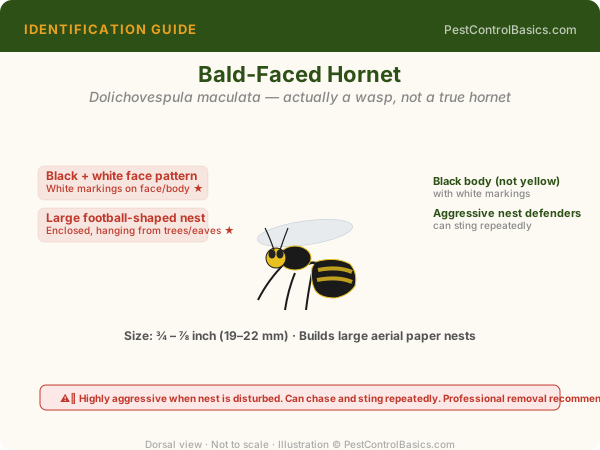
Original illustration by PestControlBasics.com. Use anatomical labels above to confirm your identification. For photo references, see the identification section below.
Not a true hornet — more aggressive than most
Bald-faced "hornets" are technically in the yellow jacket genus (Dolichovespula) rather than the true hornet genus (Vespa). The one true hornet in the U.S. is the European hornet (Vespa crabro), which is larger and less aggressive than the bald-faced hornet despite being the genuine article taxonomically.
Appearance: Black body with white or ivory markings on the face (the "bald" reference), thorax, and abdomen. About 3/4 inch — larger than standard yellow jackets. The face is distinctively white/ivory on a black head — no other common U.S. wasp looks like this.
Nest identification: Bald-faced hornet nests are large enclosed structures made of chewed wood pulp — gray, papery, with a striped appearance from multiple layers of material. They are typically football-shaped when small and can reach basketball size or larger by late summer. They hang from trees, shrubs, eaves, and occasionally fences or overhangs. The single entrance hole is at the bottom of the nest.
Night-only protocol and when to call a pro
Size matters for DIY decisions: A nest that is fist-sized or smaller in an accessible, non-traffic location can reasonably be treated with DIY jet aerosol at night. A basketball-sized nest in a tree near a doorway, or any nest in a location that requires approaching within 10 feet before spraying, warrants professional treatment.
Nighttime jet aerosol protocol: Use a pyrethroid-based jet aerosol (Spectracide Wasp and Hornet, Raid Wasp and Hornet) that sprays 15–20 feet. Approach slowly, upwind, with a red flashlight. Soak the entrance hole at the bottom of the nest with a 3–5 second burst. Back away immediately. Do not run — sudden movement triggers pursuit. Return in 24 hours to verify no activity before removing the nest.
Why bald-faced hornets are especially dangerous: Unlike yellow jackets whose nests are often underground or hidden in structural voids, bald-faced hornet nests are often in open locations near human traffic. Workers will attack targets that approach or vibrate the nest from 10+ feet away — farther than most people expect. Mowing beneath a tree with an attached nest is a documented cause of serious multiple-sting incidents.
Any bald-faced hornet nest larger than a softball, located in a high-traffic area, or above 6 feet warrants professional treatment. Licensed pest control professionals have the PPE and equipment to treat these nests safely. The cost is small relative to the risk of a serious sting incident.