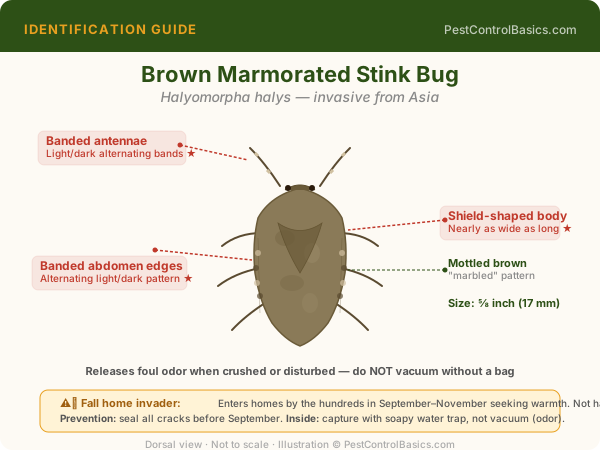
Original illustration by PestControlBasics.com. Use anatomical labels above to confirm your identification.
🔍 Identification
14mm; shield-shaped; marbled brown/grey; diagnostic feature: alternating black and white bands on the abdomen margin and antennae (6 alternating segments visible). Adults also have a characteristic straight-edged abdomen (vs. curved in native stink bugs). Juveniles (nymphs): bright red-orange with black markings — strikingly different from adults.
🧬 Biology & Behavior
Invasive from Asia; first detected in Allentown, PA around 1996; now in 47 states. Produces aggregation pheromone that draws individuals to the same structures year after year. One generation per year; overwinters as adult in aggregations. 300+ host plant species including virtually all fruit and vegetable crops in eastern US.
⚠️ Damage & Health Risk
Agricultural losses ($37 million+ annually in the Mid-Atlantic alone); structural nuisance invasions; odor when disturbed; minor staining from defensive secretion if crushed. Psychological impact of large fall invasions.
🔧 DIY Treatment
The September exterior spray (bifenthrin or lambda-cyhalothrin) applied before aggregation is the only effective prevention. Seal exterior gaps. Yellow exclusion netting on high-value crops. Vacuum indoor individuals rather than crushing.
👷 When to Call a Pro
For persistent severe invasions, professional September application with commercial equipment provides better coverage than homeowner sprayers.