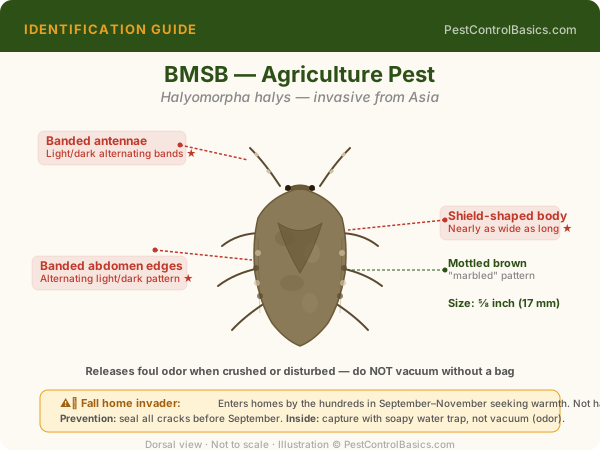
Original illustration by PestControlBasics.com. Use anatomical labels above to confirm your identification.
🔍 Identification
BMSB feeds on 300+ plant species using piercing-sucking mouthparts. Crop damage: apples and pears (corky spots and cat-facing under skin); peaches (internal brown streaks); corn (kernel discoloration and abortion); soybeans (seed shriveling). The damage is cosmetic but causes commodity grade failure — making economically sound fruit unmarketable.
🧬 Biology & Behavior
Mid-Atlantic apple orchards lost 37-50% of their crop value in 2010 — the year BMSB pressure peaked in that region. Total estimated US agricultural losses: $21 billion through 2023. The pest's biological control is limited — native predators don't control it effectively, and it has developed resistance to some pyrethroid sprays in high-pressure areas.
⚠️ Damage & Health Risk
Crop losses in fruit, vegetable, and grain production; cosmetic damage causing market grade failures; significant economic impact on mid-Atlantic and Pacific Northwest agriculture; expanding losses as range increases.
🔧 DIY Treatment
Residential: September bifenthrin perimeter spray (same as nuisance management). Agricultural: pheromone lures for monitoring; pyrethroid sprays timed to adult entry in orchards; exclusion netting (the most effective but expensive approach) for high-value tree fruits.
👷 When to Call a Pro
USDA APHIS has released the samurai wasp (Trissolcus japonicus) — a host-specific egg parasitoid from Asia — as biological control. Early release results are promising, showing 60-80% egg parasitism in some orchards.