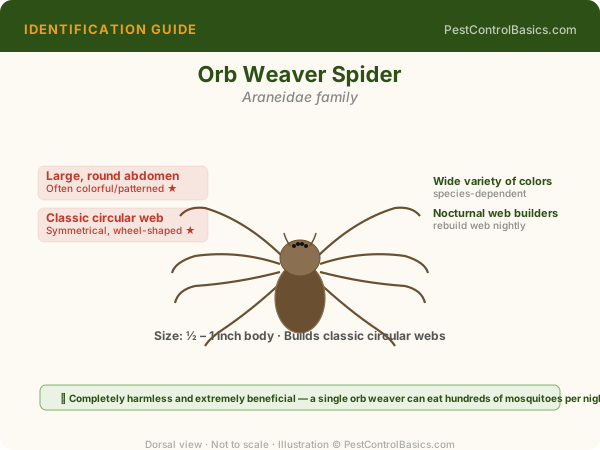
Original illustration by PestControlBasics.com. Use anatomical labels above to confirm your identification. For photo references, see the identification section below.
How it's built and why
The classic circular spider web — the one in every Halloween decoration — is built by orb weavers. It is one of the most complex structures produced by any invertebrate. An adult female may build a new web every night, eating the old one and recycling the protein.
Construction sequence: The spider first creates a frame of non-sticky silk, then a hub at the center, then radial threads from hub to frame, and finally a spiral of sticky capture silk. The whole process takes 30–60 minutes. The web is precisely engineered — radial threads are stiffer for structure while capture spiral threads are elastic to absorb impact.
The stabilimentum: Many orb weavers add a zigzag or X-shaped band of thicker, white silk through the center of the web. Its function is debated — possibilities include making the web visible to large animals (preventing accidental damage), reflecting UV light to attract insects, or providing camouflage for the spider. The garden spider (Argiope) is famous for this feature.
Nightly catch: A single orb weaver can catch 2,000+ flying insects in a season — mosquitoes, gnats, flies, moths, and other crop pests. In gardens, they provide significant free pest control.
Identification and the case for leaving them
Black and yellow garden spider (Argiope aurantia): Large, striking yellow and black female, zigzag stabilimentum, found in gardens and meadows. Among the most visible garden spiders in the eastern U.S. Completely harmless.
Cross orb weaver (Larinioides sclopetarius): Gray-brown with pale cross pattern on abdomen. Common near porch lights (which attract their prey). Frequently builds webs on structures.
Should you remove garden orb weavers? In most cases, no. They are actively catching pest insects and their webs are only a seasonal presence — adults die with the first frost. The egg sac they leave behind hatches in spring, but the tiny spiderlings disperse immediately and don't create an indoor problem.
If placement is problematic: Gently move the web with a stick to a more convenient location in the same garden. The spider will rebuild nearby. To eliminate completely, break the web and the spider will relocate.