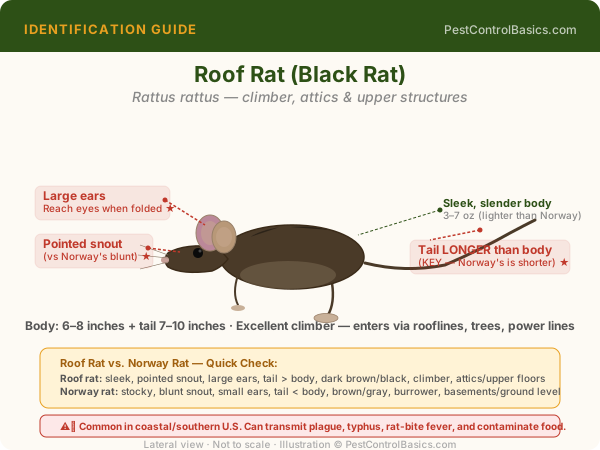
Original illustration by PestControlBasics.com. Use anatomical labels above to confirm your identification. For photo references, see the identification section below.
Roof rat vs. Norway rat — where the evidence is tells you
The easiest identification approach: where are you finding droppings and damage? Norway rats are ground-level creatures — basements, crawlspaces, along foundations. Roof rats are overhead creatures — attics, upper shelves, on top of stored boxes, along rafters.
The tail test: Roof rat tail is longer than its body. Norway rat tail is shorter than its body. This single measurement resolves any ambiguity.
Dropping shape: Roof rat droppings are 1/2 inch with pointed, banana-curved ends. Norway rat droppings are 3/4 inch with blunt, capsule ends.
Sound clues: Roof rats in the attic produce light scratching and running sounds in the ceiling — often heard at night as they're active. Norway rats in crawlspaces produce heavier, slower sounds along walls at ground level.
Tree trimming is as important as trapping
Step 1 — Eliminate access routes: Trim every tree branch to at least 3 feet from the roofline. Roof rats use overhanging branches as their primary highway to your roof. Also address utility lines close to the structure and any vines growing on exterior walls — all are travel routes.
Step 2 — Seal the roofline: Inspect the full roofline at dusk when rats are active — watch where they enter. Common gaps: fascia-soffit joints, damaged soffit panels, roof vent gaps, and openings around cable/conduit penetrations through upper walls. Seal with hardware cloth backed by caulk or trim.
Step 3 — Trap at elevation: Attach large snap traps (T-Rex or Tomcat rat traps) to rafters and joists with wire or zip ties. Set along walls and in corners where droppings are concentrated. Check every 48 hours. Traps on the attic floor where rats rarely walk are wasted effort.
Fruit management (coastal areas): Harvest citrus and other fruit promptly. Pick up fallen fruit daily. Roof rats are "citrus rats" in Florida and California — the food source is often the primary driver of infestation pressure.