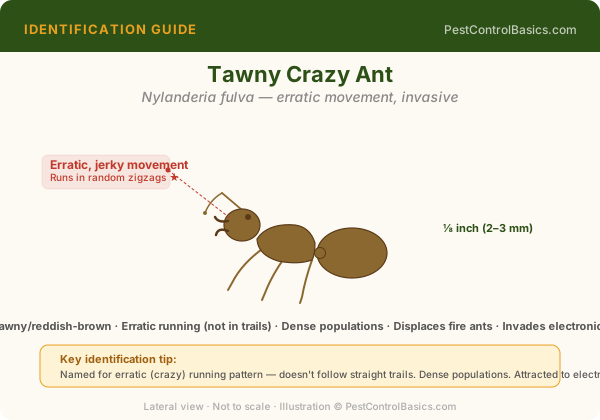
Original illustration by PestControlBasics.com. Use anatomical labels above to confirm your identification. For photo references, see the identification section below.
The mass invasion nobody expects
Most ant infestations involve trails and identifiable colonies. Tawny crazy ants are different — when populations boom (which happens rapidly under good conditions), they move in such enormous numbers that surfaces appear to be rippling. Structures in heavily infested Texas areas have been documented with hundreds of thousands of ants per square foot on exterior walls.
Electronics damage: Tawny crazy ants are attracted to electrical equipment and seek out void spaces inside electronics — junction boxes, AC units, computers, vehicles, and appliances. They accumulate until equipment fails, and their dead bodies attract more ants. In Texas, millions of dollars in electrical equipment have been destroyed by tawny crazy ant infestations.
Displacing fire ants: Tawny crazy ants chemically neutralize fire ant venom and aggressively outcompete fire ants for territory. Areas with severe tawny crazy ant infestations have fewer fire ant mounds — which sounds good but means a different, often harder-to-manage ant problem replaces a familiar one.
What works — and the realistic expectation
Tawny crazy ant control is challenging and population suppression rather than elimination is the realistic goal. Even professional treatment provides temporary reduction rather than permanent control in heavily infested areas.
Bifenthrin perimeter treatment: The most effective approach is repeated, high-rate bifenthrin applications around the full building perimeter. Applications must be repeated every 2–4 weeks during active season. This keeps ants from entering structures but doesn't eliminate the surrounding population.
Fipronil broadcast: Broadcast fipronil applications to the property can reduce overall population density over multiple treatment cycles. This requires a licensed pest control professional.
Electronics protection: Seal all electrical penetrations entering the structure. Wrap utility lines with slippery tape. Consider enclosing critical equipment in sealed containers during peak invasion periods.
Tawny crazy ant infestations at the scale seen in Texas require professional assessment. The scope of treatment needed exceeds what standard DIY products can achieve. Contact a licensed pest control company with specific tawny crazy ant experience.