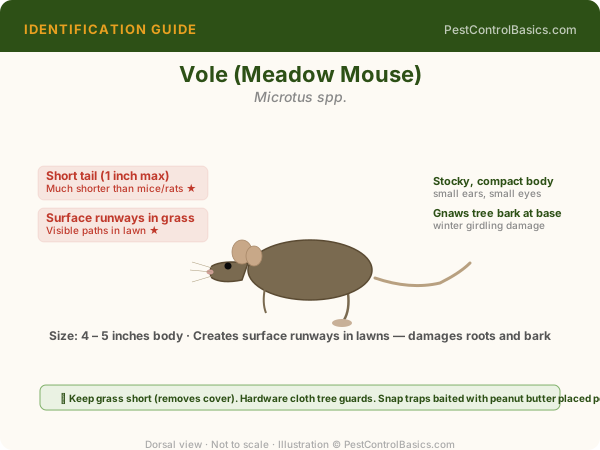
Original illustration by PestControlBasics.com. Use anatomical labels above to confirm your identification. For photo references, see the identification section below.
The confusion that leads to wrong treatment
These two pests cause different damage and require completely different control approaches. Treating for the wrong one wastes time and money.
Voles (Microtus): Create 2-inch wide surface runways worn through the grass — look for paths where the grass is worn away or matted flat at ground level. Voles eat plants: roots, tubers, bulbs, and tree bark. They're herbivores. If your tulip bulbs disappear and young trees have bark gnawed away at the base — voles.
Moles (Scalopus): Create raised ridge tunnels that push the lawn surface up into ridges, and dome-shaped mounds of loose soil. Moles eat earthworms and grubs — they are completely plant-safe. Moles rarely appear at the surface. Raised ridges + volcano mounds = mole.
Vole girdling: A tree with bark removed in a complete ring around the base (especially over winter under snow) has been girdled by voles. Complete girdling kills the tree by severing the phloem. Hardware cloth cylinders prevent this permanently.
Traps in runways — no bait required
Voles are not neophobic — they will run through their established runways regardless of what's placed in them. This makes snap trap control highly effective without the pre-baiting rigmarole needed for Norway rats.
Trap placement: Place standard mouse snap traps (Victor, Tomcat) directly in active runways with the trigger bar perpendicular to the runway direction. The vole running through will trigger it with its body. No bait is necessary, though peanut butter or apple slice can increase catch rate.
Cover the traps: Place a flat board, shingle, or piece of cardboard over the trap to create a dark tunnel effect. Voles feel safer in covered runways and the covered setup also protects non-target birds and pets.
Tree guards: Install 1/4-inch hardware cloth cylinders 18 inches tall around every tree or shrub base at risk. Bury 3–4 inches deep. Leave a 2-inch gap between the hardware cloth and trunk.
Habitat reduction: Mow lawn short, especially in fall before snow. Remove dense ground cover near gardens. Voles need cover to thrive — eliminating it reduces populations naturally.