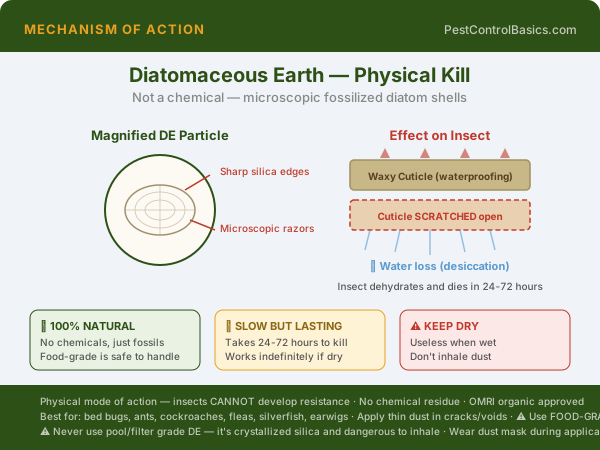
Diatomaceous Earth mechanism of action diagram

How diatomaceous earth works — illustrated mechanism of action · PestControlBasics.com

🧪 Active Ingredient Profile

Diatomaceous Earth — Food Grade, Pool Grade & Pest Control Guide

Desiccant (Physical Mode of Action) · CAS 61790-53-2

Diatomaceous earth (DE) is fossilized diatom shells — and one of the few truly physical pest control agents. No chemical toxicity, no resistance possible. The critical distinction: food-grade DE is safe; pool-grade DE (crystalline silica) is a respiratory carcinogen.

Mode of Action Mechanical — microscopic silica particles abrade and absorb the waxy epicuticular layer of insect exoskeletons, causing lethal dehydration; no chemical toxicity
⚖️ Educational use only. Always read and follow the full product label — the label is the law under FIFRA. Full disclaimer → | ⚗️ Mixing Calculator →

📋 Key Facts

Type
Amorphous silica (food-grade) or crystalline silica (pool-grade)
Signal Word
None (food-grade) / Danger (pool-grade)
Mode of Action
Physical dehydration — no chemical resistance possible
OMRI Listed
Yes (food-grade)
Effectiveness
Kills in hours to days depending on contact
Key Products
Harris DE, Safer Brand DE, CimeXa (silica gel — more effective)
Critical Distinction
NEVER use pool-grade DE around people or pets

🎯 Primary Uses

Food-grade diatomaceous earth is used for: cockroach control in harborage areas, bed bug treatment (less effective than CimeXa), stored product pest prevention, ant control in wall voids, and garden pest management. Apply as a thin, barely-visible layer — thick application repels insects.

🛡️ Safety Summary

Food-grade amorphous DE is considered non-toxic to mammals when used correctly. The primary safety concern is respiratory — inhaling any fine dust repeatedly can cause irritation. Wear an N95 mask during application. Pool-grade DE contains crystalline silica — a known human carcinogen — and should NEVER be used for pest control.

Example
0.5 oz
per gallon
⚗️ Mixing Calculator
Enter your sprayer size and target rate — get the exact amount to pour. Backpack, hand sprayer, hose-end, or skid unit.
Open Calculator →

🔬 Resistance Status

No chemical resistance possible — DE works by physical abrasion, not chemistry. Insects cannot develop resistance to physical dehydration. This makes it permanently effective for cockroaches and bed bugs that have developed resistance to all chemical insecticides.

🏷️ Common Products

Harris DESafer Brand Crawling Insect KillerHARRIS Bed Bug KillerCimeXa (silica gel — superior to DE for bed bugs)Perma-Guard Food Grade DE

🐛 Pests This Treats — Learn More

Click any pest to view its full identification guide, biology, and treatment options.

🐛 Bed Bug → 🐛 Cockroaches → 🐛 Scales → 🐛 Ticks →

🌿 Environmental & Ecological Impact

🐝 Bees / PollinatorsLOW
🐟 Fish / Aquatic LifeLOW
🐦 BirdsLOW
🐕 Mammals / PetsLOW
🦐 Aquatic InvertebratesLOW
💡 Mechanical mode of action. No chemical toxicity. Can harm beneficial insects if applied directly to them.

⏱️ Residual & Re-entry Timeline

🔹
Apply
Follow label mixing and application rates
🔸
Re-entry: After dust settles
Keep people and pets out of treated area
🟢
Effective period: Indefinite while dry
Active residual — killing or repelling target pests
🔄
Reapply
Re-treat when pest activity returns or residual expires

🔄 Alternatives & Related Products

Same chemical class or different approaches to the same pests.

🔄
Boric Acid
Same class: Inorganic
↔️
Pyrethrin
Different approach: Botanical Pyrethrin
↔️
Methoprene
Different approach: IGR

❓ Frequently Asked Questions

Q: Is diatomaceous earth safe for pets?
Follow the product label. Keep pets out of treated areas until completely dried (2–4 hours for sprays). Once dry, treated surfaces pose minimal risk to dogs and cats.
Q: Can I use diatomaceous earth indoors?
Yes — Diatomaceous Earth is commonly used indoors in bait and dust formulations. Apply in cracks, crevices, and voids away from food surfaces.
Q: How long does diatomaceous earth last after application?
Residual varies by formulation, surface type, weather, and UV exposure. Indoor applications last longer than outdoor. Check the product label for re-application intervals.
Q: What should I do if exposed?
Remove contaminated clothing, wash skin with soap and water. For eye contact, rinse 15–20 minutes. For ingestion or severe symptoms, call Poison Control (1-800-222-1222). Have the product label available.

📋 Safety Data Sheet (SDS)

📋

Diatomaceous Earth — Safety Data Sheet

View the official SDS document for this product directly on the CDMS label database.

Diatomaceous Earth Safety Data Sheet page 1
📄 Diatomaceous Earth — Safety Data Sheet · View the complete SDS document above or download below
📚 Sources: EPA Pesticide Labels · NPIC Pesticide Info
Published: Jan 1, 2025 · Updated: Apr 7, 2026
🔮
Reviewed by Derek GiordanoContent reviewed by a licensed pest management professional and cross-referenced against EPA, university extension, and manufacturer technical data. Last reviewed: April 2026.