📐 FIELD GUIDE ILLUSTRATION
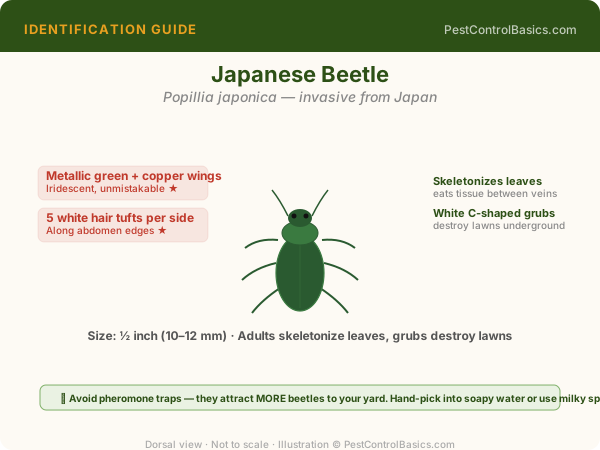
Original illustration by PestControlBasics.com. Use anatomical labels above to confirm your identification.
🔄 Life Cycle Overview
🥚
Egg
→
🐛
Grub
→
🫘
Pupa
→
🪲
Adult
🥚
Egg
Eggs in Turf — 300 Per Female
Females leave feeding sites daily to lay eggs in turf. Each female lays 40-60 eggs over 6-8 weeks. Eggs are laid 2-4 inches deep in moist soil of lawns and turfgrass.
('40-60 eggs/female', '2-4 inches deep in turf', 'Prefer moist, irrigated lawns')
🐛
Grub
White Grub — Root-Feeding Stage
C-shaped white grubs feed on grass roots from August through spring. Three instars over 10 months. 3rd instar grubs overwinter 4-10 inches deep, rising to feed again in spring.
('3 instars', '10 months in soil', 'Overwinter deep; rise in spring')
🫘
Pupa
Pupa — 2 Weeks in Soil
Pupation occurs 2-4 inches deep in May-June. Adult emerges and tunnels to surface.
('2 weeks', 'May-June', 'Surface emergence June-July')
🪲
Adult
Adult — Peak Damage July-August
Adults feed in aggregations on 300+ plant species for 6-8 weeks. Return to turf daily to lay eggs. The aggregation pheromone + plant volatiles attract more beetles.
('6-8 week adult season', '300+ host plants', 'Aggregation feeding')
🔬 Key Biology Facts
⏱️Grub treatment window: Late June to mid-July for newly hatched 1st-2nd instar grubs — most susceptible and near surface.
🦟Adult season: Mid-June through August in most US states; peaks in July.
🌡️Temperature trigger: Adults emerge when soil temperature reaches ~60°F — typically late June in northern states, early June in southern.
📅 Seasonal Activity
One generation per year. Eggs: July. Grubs: August-October (active feeding), November-March (deep dormancy), April-May (resumed feeding). Adults: June-August.
⏰ Treatment Timing
Grubs: apply chlorantraniliprole (Acelepryn, Grub-X Prevent) in late June-July; imidacloprid in May-June as preventive. Adults: hand-pick in morning; pyrethroid spray for severe infestations; avoid pheromone traps (attract more beetles).
✅ Target the most vulnerable life stage for maximum treatment effectiveness.