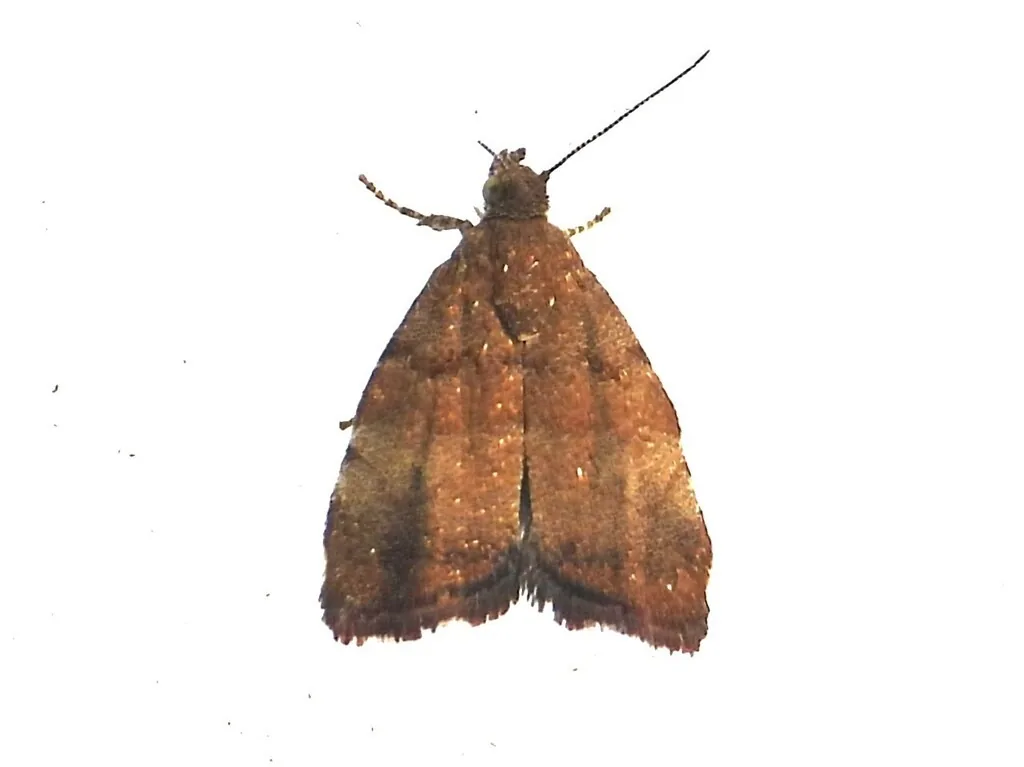
How to identify it
Where it lives
The PNW Insect Management Handbook covers it on landscape trees in the Pacific Northwest.[1]
Biology and life cycle
Adult moths overwinter in crevices on the tree and lay small bunches of eggs under the leaves.[1]
Larvae feed under the leaf, then on top, often several to a roll; they pupate after three to four weeks, and adults emerge about two weeks later.[1]
There are at least two generations a year.[1]
Apple is preferred, but it also feeds on crabapple, cherry, pear, mountain ash, birch, plum, hawthorn and possibly willow.[1]
Damage and signs
Health risk
It feeds on plants; the PNW Insect Management Handbook mentions no risk to people.[1]
Control
Prevention
Scout trees early for skeletonizing to see whether larval numbers are high.[1]
Traps and physical control
On small trees, pinch rolled leaves to kill larvae or pull larvae and pupae out of the rolls; remove heavily infested twigs.[1]
Biological control
Many natural enemies attack it, so avoid broad-spectrum sprays that would disrupt them.[1]
Common questions
Sources
- Pacific Northwest Pest Management Handbooks (OSU, WSU, University of Idaho), “Crabapple, flowering (Malus): Apple-and-thorn skeletonizer (Insect Management Handbook).” pnwhandbooks.org/insect/hort/landscape/hosts-pests-landscape-plants/crabapple-flowering-malus-apple-thorn-skeletonizer (accessed 2026-10-06)
- iNaturalist, “Choreutis pariana taxon page (order and family).” www.inaturalist.org/taxa/203337 (accessed 2026-10-06)