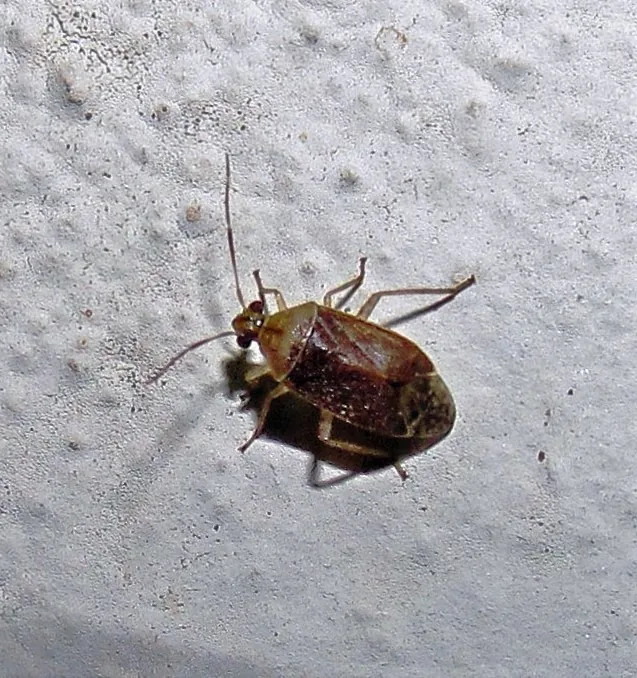
How to identify it
Look-alikes
| Look-alike | How to tell them apart |
|---|---|
| Ash anthracnose | If leaves drop in spring, the cause is usually ash anthracnose or stress, not plant bugs.[1] |
Where it lives
It feeds on green, white and black ash.[1]
Biology and life cycle
Eggs hatch as ash leaves expand; first-generation adults appear in June and second in July or August.[1]
Second-generation eggs overwinter in bark and bud scales; there are two generations a year.[1]
Damage and signs
Health risk
It feeds on ash only; Minnesota Extension mentions no risk to people.[1]
Control
Prevention
Ignore and tolerate the damage in most cases.[1]
Pesticides
If needed, insecticidal soap or pyrethrins on spring nymphs work on contact; later sprays are less effective.[1]
Common questions
Sources
- University of Minnesota Extension, “Ash plant bugs (Yard and garden insects).” extension.umn.edu/garden-and-home/yard-and-garden/yard-and-garden-insects/ash-plant-bugs (accessed 2026-10-06)
- iNaturalist, “Tropidosteptes taxon page (order and family).” www.inaturalist.org/taxa/358317 (accessed 2026-10-06)