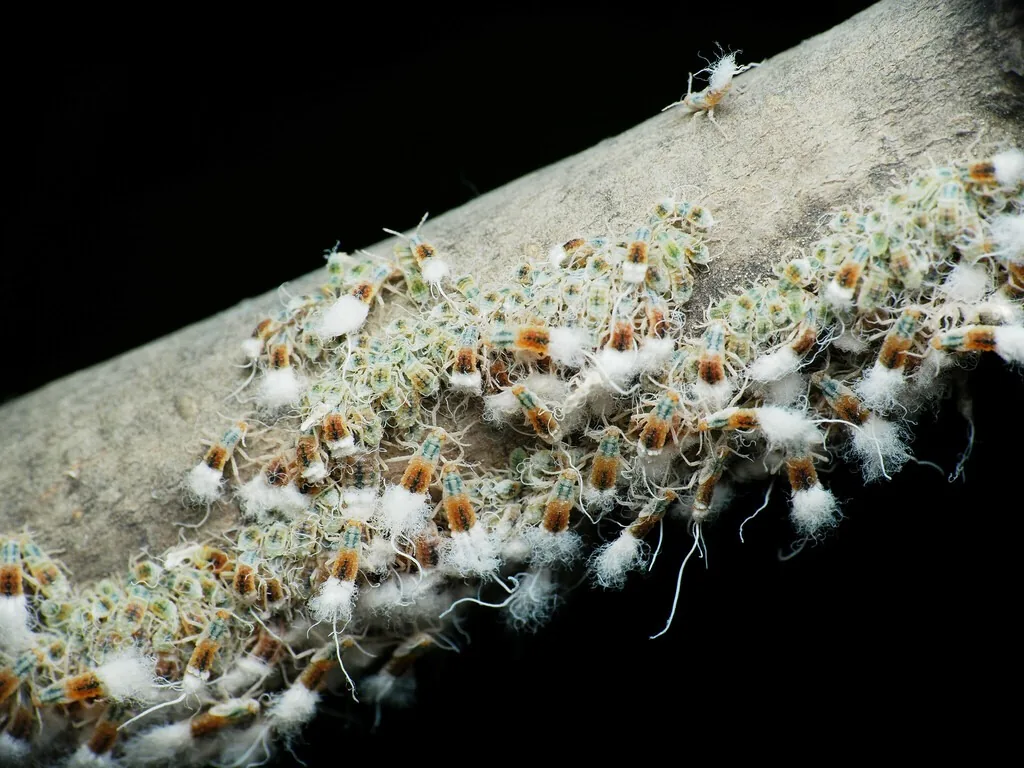
How to identify it
Where it lives
NC State and Clemson report it on American beech in the Carolinas; it alternates between beech and bald cypress.[1][2]
Biology and life cycle
It spends the winter on bald cypress roots, then flies to beech to lay eggs for the spring generation.[1][2]
Colonies persist on beech from April through November in North Carolina; winged aphids leave in summer and fall for bald cypress.[1]
Nymphs can use their mouthparts to jab predators, and may even jab a person who lets them touch bare skin.[1]
Damage and signs
Health risk
Not a health risk, though nymphs may jab skin that touches a colony.[1]
Control
Biological control
Populations are sometimes wiped out by an insect-infecting fungus and are attacked by parasites and predators.[1]
Pesticides
Where control is wanted, pyrethroids, horticultural oil (weather permitting) or insecticidal soap should suppress them; keep pyrethroids away from pools, ponds and streams.[1]
Common questions
- What is the white fuzz on my beech tree branches?
- Usually colonies of beech blight aphid nymphs covered in white waxy filaments.[1][2]
- Will beech blight aphids kill my tree?
- No; damage to the beech is minimal, though the sooty mold below is unsightly.[2]
- Why do the aphids dance?
- Disturbed nymphs raise and wave their abdomens together, apparently as a warning to predators.[1][2]
Sources
- NC State Extension, “Beech Blight Aphid (PDIC Factsheet).” content.ces.ncsu.edu/beech-blight-aphid (accessed 2026-10-15)
- Clemson Cooperative Extension, Home & Garden Information Center, “The Beech Blight Aphid Nymphs.” hgic.clemson.edu/the-beech-blight-aphid-nymphs/ (accessed 2026-10-15)
- iNaturalist, “Grylloprociphilus imbricator taxon page (order and family).” www.inaturalist.org/taxa/146709 (accessed 2026-10-06)