Pest profile

Beet Armyworm

Spodoptera exigua · Lepidoptera: Noctuidae[2]

Beet armyworms feed in groups when young, skeletonizing leaves, then spread out and chew large holes in foliage and fruit.[1]

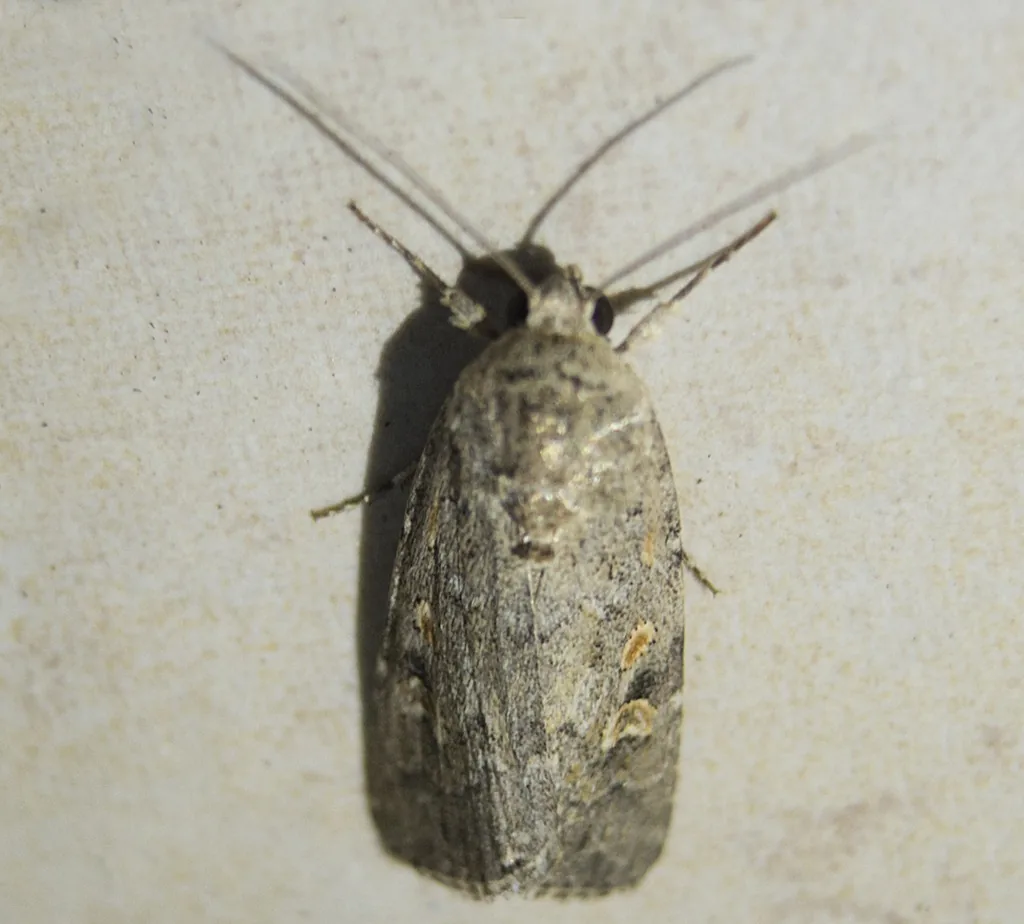
Beet armyworm moth with mottled gray and brown forewings, resting on a surface
Beet armyworm moth with mottled gray and brown forewings, resting on a surface. (c) katunchik, some rights reserved (CC BY) — via iNaturalist, CC BY 4.0

How to identify it

  • Moths have a 1 to 1-1/8 inch wingspan, mottled gray-brown forewings with a light bean-shaped spot, and pale hind wings.[1]
  • Young larvae feed together and skeletonize leaves.[1]

Where it lives

Originally from Southeast Asia, it overwinters mainly in Arizona, Florida and Texas and spreads north each season.[1]

US map: public records from 27 states since 1990 (GBIF).

Biology and life cycle

In Florida all stages occur year round, and the life cycle can take as little as 24 days.[1]

Damage and signs

  • Larvae feed on foliage and fruit and are serious defoliators of flower crops and cotton in Florida.[1]

Health risk

It feeds on plants; UF/IFAS mentions no risk to people.[1]

Control

Biological control

Much injury is induced by insecticide use that interferes with natural enemies.[1]

Common questions

What's skeletonizing my vegetable leaves?
Young beet armyworms feeding in groups skeletonize foliage.[1]
Where does it overwinter?
Mainly in Arizona, Florida and Texas.[1]

Sources

  1. University of Florida IFAS Extension (Featured Creatures), “Beet Armyworm, Spodoptera exigua (EENY-105).” edis.ifas.ufl.edu/publication/IN262 (accessed 2026-10-06)
  2. iNaturalist, “Spodoptera exigua taxon page (order and family).” www.inaturalist.org/taxa/231425 (accessed 2026-10-06)

Updated 2026-10-14. Built from sourced records. Spot an error? Tell us.