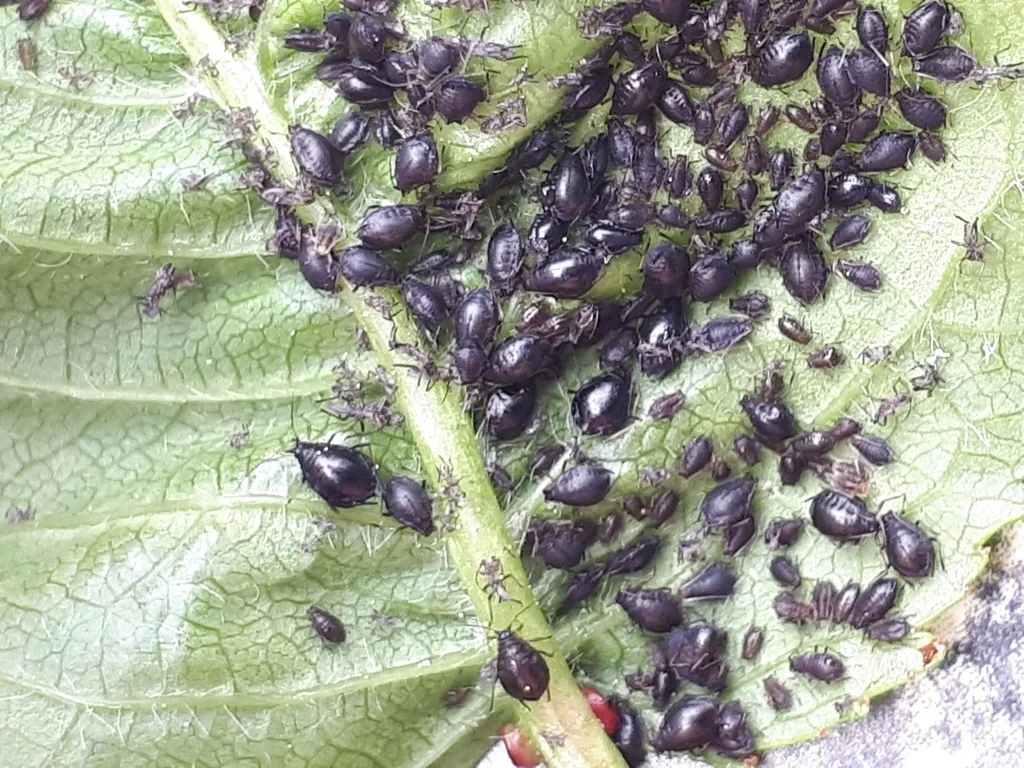
How to identify it
Where it lives
Penn State Extension covers it as a pest of cherry trees in Pennsylvania.[1]
Biology and life cycle
Eggs overwinter on the bark of small branches and start hatching as soon as cherry buds break.[1]
Wingless stem mothers build large colonies on growing shoots within three to four weeks, and two or three generations follow by early July.[1]
Most then move to summer weed hosts such as watercress, peppergrass and other mustard-family plants, returning to cherry in September or October to lay eggs.[1]
Sweet cherries are strongly preferred; Napoleon, Black Tartarian, Schmidt and Windsor are among the most susceptible varieties.[1]
Damage and signs
Health risk
It feeds on plants; Penn State Extension mentions no risk to people.[1]
Control
Prevention
Scout in early spring for stem mothers on growing shoots and judge the infestation before leaves curl; young trees can't tolerate even low numbers.[1]
Biological control
Syrphid flies, lacewings and lady beetles are often abundant enough to control this aphid.[1]
Pesticides
Delayed-dormant oil and insecticide sprays applied for other cherry pests usually control it as well.[1]
Common questions
Sources
- Penn State Extension, “Tree Fruit Insect Pest: Black Cherry Aphid.” extension.psu.edu/tree-fruit-insect-pest-black-cherry-aphid (accessed 2026-10-06)
- iNaturalist, “Myzus cerasi taxon page (order and family).” www.inaturalist.org/taxa/393053 (accessed 2026-10-06)