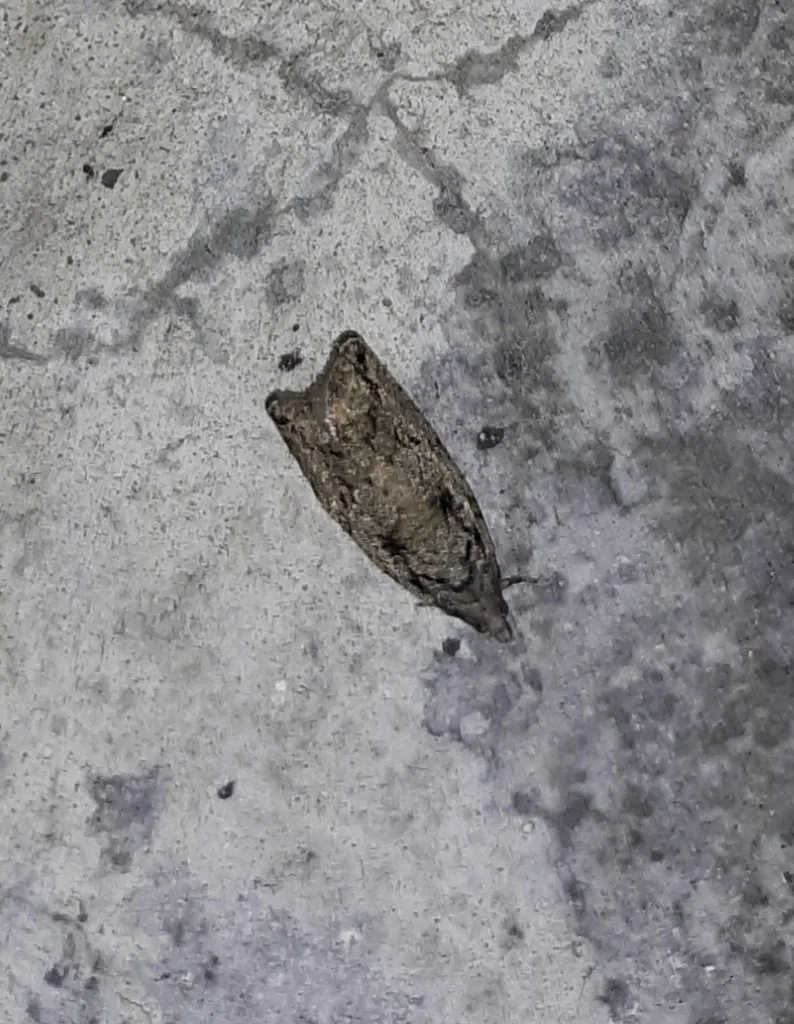
How to identify it
Where it lives
UK Extension describes it on boxelder and red maple.[1]
Biology and life cycle
Eggs hatch in mid-July and young larvae feed on leaves under silk; in autumn they bore into petioles or buds for winter.[1]
In spring each caterpillar bores into a new shoot to finish developing.[1]
Damage and signs
- By the time symptoms show, caterpillars are inside twigs and safe from control.[1]
Health risk
It feeds on plants; UK Extension mentions no risk to people.[1]
Control
Pesticides
Control must target the leaf-feeding stage in mid-July; carbaryl applied in late July and again in early August reduces infestations.[1]
Common questions
Sources
- University of Kentucky Entomology (ENTFACT), “Boxelder Twig Borer (ENTFACT-415).” entomology.mgcafe.uky.edu/ef415 (accessed 2026-10-06)
- iNaturalist, “Proteoteras willingana taxon page (order and family).” www.inaturalist.org/taxa/417016 (accessed 2026-10-06)