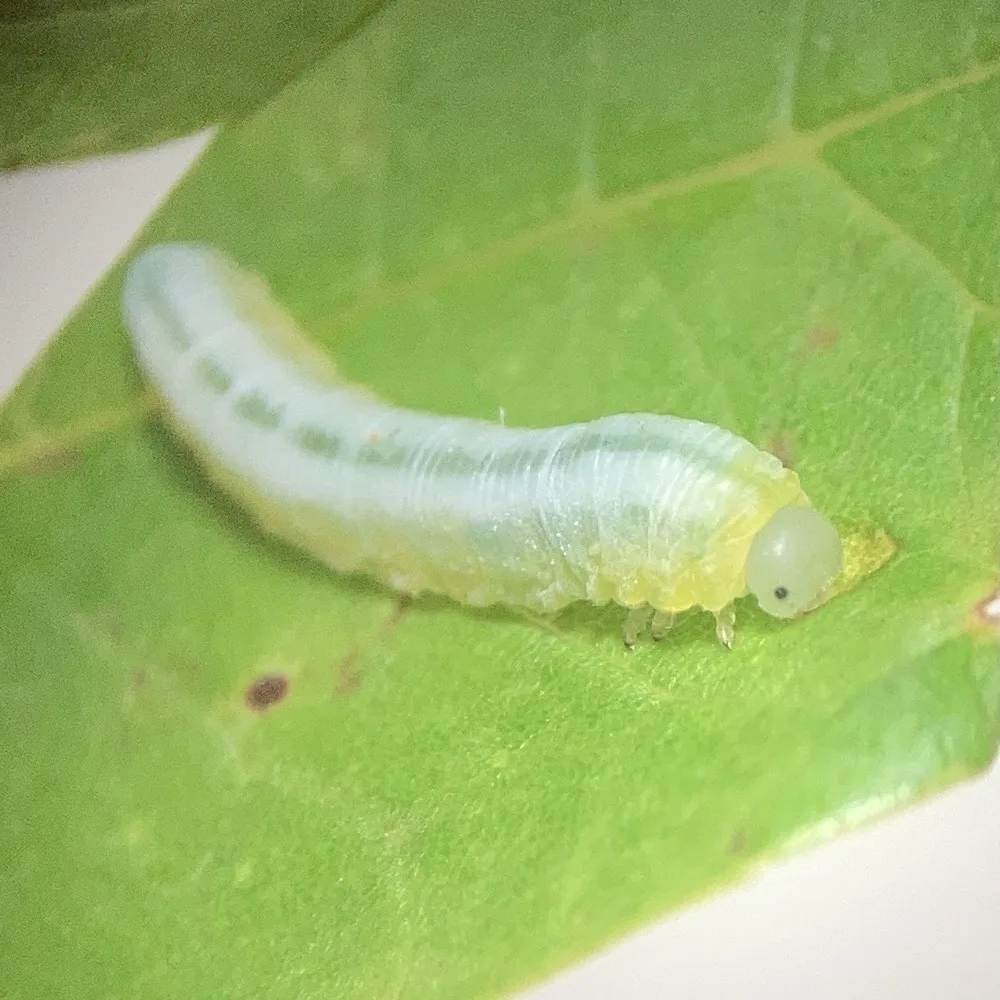
How to identify it
Where it lives
Native to the eastern US, where it's rarely a problem, it appeared in Colorado's Arkansas Valley by the early 1980s and has since spread along the Front Range and onto the Western Slope.[1]
Biology and life cycle
Full-grown larvae overwinter in cocoons in soil under ash; adults emerge by late April and lay eggs in expanding leaf edges.[1]
Larvae finish feeding within two to three weeks of hatching; there's one generation a year.[1]
Damage and signs
- Repeated heavy defoliation stresses trees, and wandering larvae can be a nuisance.[1]
Health risk
It feeds on plants; CSU Extension mentions no risk to people.[1]
Control
Prevention
Watch for pinholes early; healthy trees benefit from control only if at least 25 percent of foliage is threatened.[1]
Traps and physical control
A strong jet of water knocks many larvae off, and few climb back.[1]
Pesticides
Insecticidal soap sprayed on the larvae works; Bt and neem don't appear effective.[1]
Common questions
Sources
- Colorado State University Extension, “Brownheaded Ash Sawfly (Fact Sheet 5.586).” extension.colostate.edu/resource/brownheaded-ash-sawfly/ (accessed 2026-10-06)
- iNaturalist, “Tomostethus multicinctus taxon page (order and family).” www.inaturalist.org/taxa/851506 (accessed 2026-10-06)