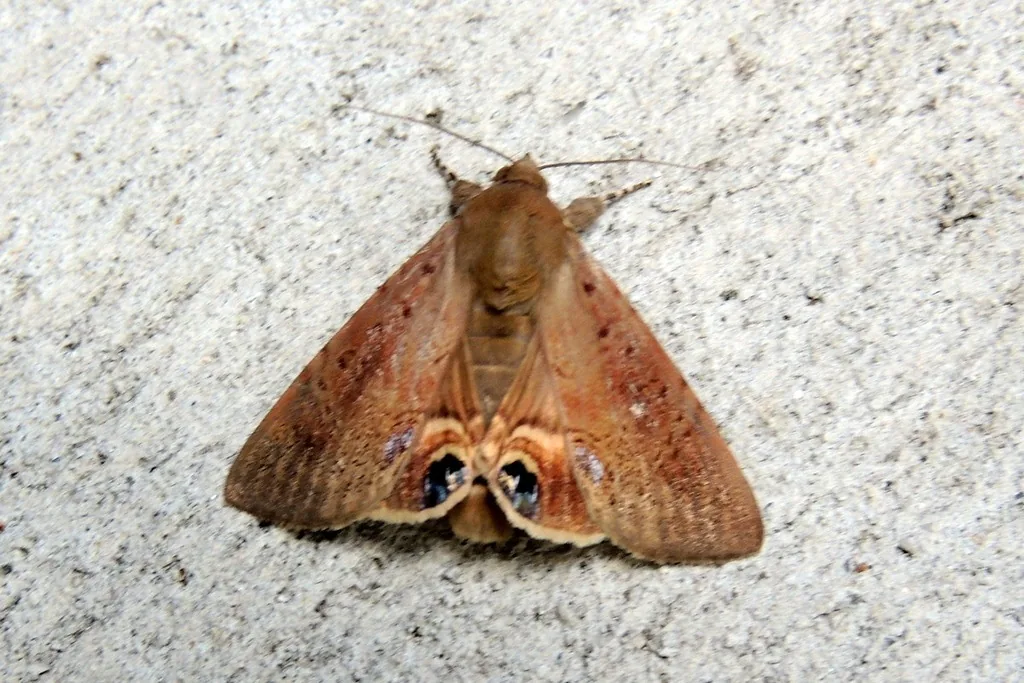
How to identify it
Where it lives
It's found through much of Florida, with verified records from coastal South Carolina and Texas.[1]
Biology and life cycle
Tiny larvae feed deep in developing cabbage palm bloom spikes, sometimes by the thousands.[1]
Mature caterpillars pupate in cocoons of palm fibers, sometimes inside buildings.[1]
Damage and signs
Health risk
UF/IFAS mentions no risk to people; the problem is caterpillars and moths getting indoors.[1]
Control
Keep them out
Find and block entry points with caulk or screen; the moths are strongly attracted to lights.[1]
Pesticides
Labeled insecticides or Bt can be applied when caterpillars are present, timed carefully to avoid foraging bees.[1]
Common questions
Sources
- University of Florida IFAS Extension (Featured Creatures), “Cabbage Palm Caterpillar, Litoprosopus futilis (EENY-095).” edis.ifas.ufl.edu/publication/IN252 (accessed 2026-10-06)
- iNaturalist, “Litoprosopus futilis taxon page (order and family).” www.inaturalist.org/taxa/177311 (accessed 2026-10-06)