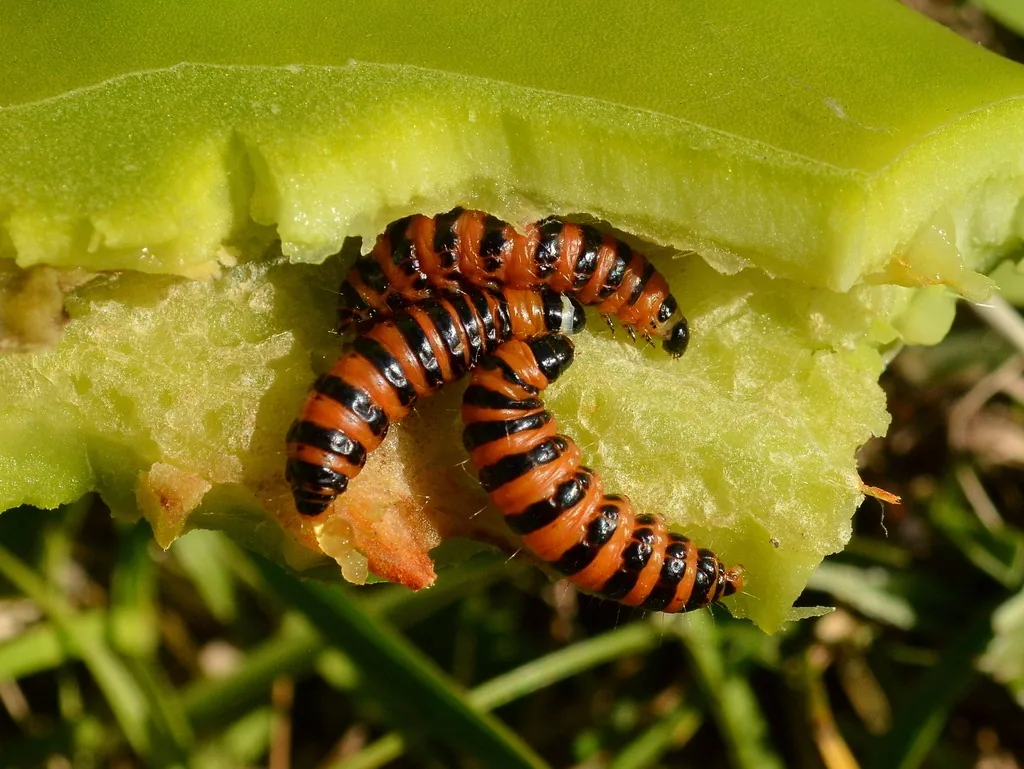
How to identify it
Where it lives
Introduced to Florida several times, it has spread along the Atlantic and Gulf coasts as far north as Charleston, South Carolina, and west to Louisiana.[1]
Biology and life cycle
Females lay an average of 75 eggs, up to 140 or more, in each egg-stick; hatching larvae crawl onto a pad and burrow into it.[1]
Larvae do poorly on prickly pears with tough skin, getting stuck in the mucilage.[1]
It was introduced to Australia in 1925 to control invasive prickly pears and reclaimed 16 million acres in Queensland.[1]
Damage and signs
- It could destroy native Opuntia; rare Florida Keys prickly pears are on the threatened list.[1]
Health risk
It feeds on cacti; UF/IFAS mentions no risk to people.[1]
Control
Biological control
Trichogramma wasps parasitize egg-sticks in north Florida, and the sterile insect technique is a possible tool.[1]
When to call a professional
No satisfactory chemical control is known, and widespread spraying isn't recommended because of rare butterflies; efforts focus on quarantine and biological control.[1]
Common questions
Sources
- University of Florida IFAS Extension (Featured Creatures), “Cactus Moth, Cactoblastis cactorum (EENY-056).” edis.ifas.ufl.edu/publication/IN213 (accessed 2026-10-06)
- iNaturalist, “Cactoblastis cactorum taxon page (order and family).” www.inaturalist.org/taxa/199409 (accessed 2026-10-06)