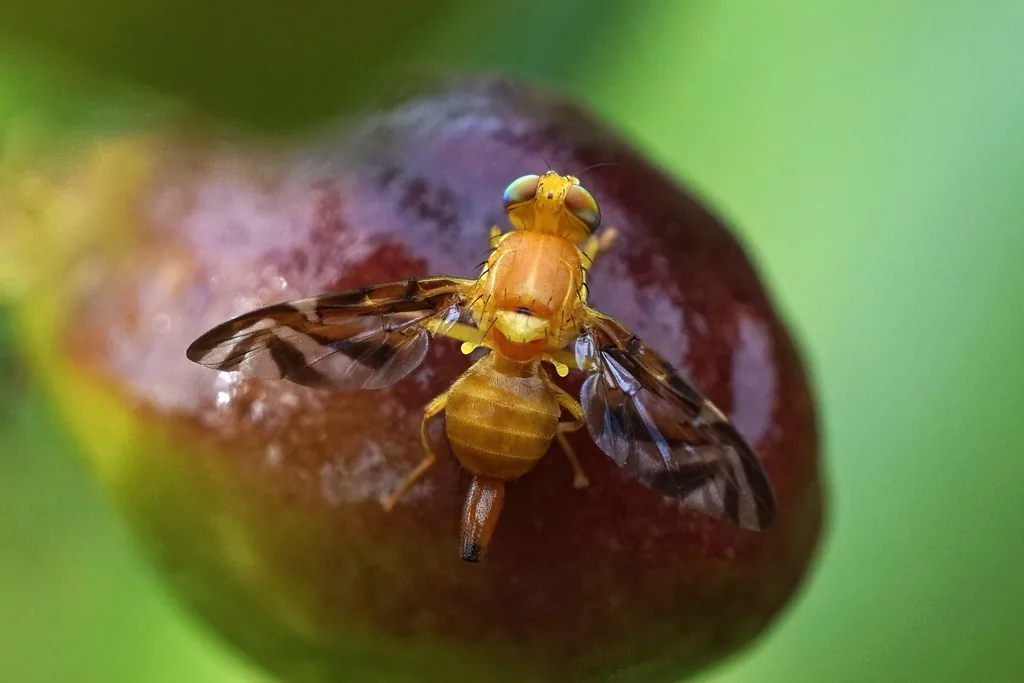
How to identify it
Where it lives
It occurs in Cuba, Jamaica, Hispaniola, Puerto Rico and Florida, where it was first found at Key West in the early 1930s.[1]
Biology and life cycle
Eggs are laid singly and hatch in two to three days; larvae feed for 10 to 14 days.[1]
Nearly 100 hosts are recorded, including several citrus species.[1]
Damage and signs
- In Florida only very ripe citrus has been attacked.[1]
Health risk
It feeds on fruit; UF/IFAS mentions no risk to people.[1]
Control
Biological control
A parasitic wasp mass-reared in Florida attacks the larvae; trapping data showed about a 40 percent drop in flies.[1]
When to call a professional
The Florida Department of Agriculture uses limited bait sprays in groves and nearby areas.[1]
Common questions
Sources
- University of Florida IFAS Extension (Featured Creatures), “Caribbean Fruit Fly, Anastrepha suspensa (EENY-196).” edis.ifas.ufl.edu/publication/IN353 (accessed 2026-10-06)
- iNaturalist, “Anastrepha suspensa taxon page (order and family).” www.inaturalist.org/taxa/649500 (accessed 2026-10-06)