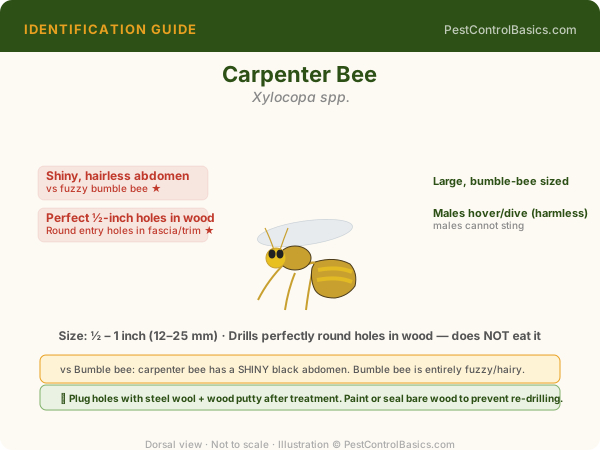
Original illustration by PestControlBasics.com. Use anatomical labels above to confirm your identification. For photo references, see the identification section below.
Shiny abdomen = carpenter bee (not bumble bee)
Carpenter bees and bumble bees are similar in size but visually distinct once you know what to look for. The abdomen is the key: bumble bees have a fuzzy, hairy abdomen with yellow markings. Carpenter bees have a shiny, bare, solid black abdomen. From above, bumble bees look fluffy throughout; carpenter bees look like they have been polished from the waist back.
Behavior distinguishes males from females: The large bees hovering near deck railings and dive-bombing passersby are males. They establish and defend a territory around nesting sites. Males are 100% harmless — they have no stinger at all. If you walk through their territory, they may hover within inches of your face. They cannot hurt you. Female carpenter bees have a stinger but spend most of their time inside the tunnel boring or provisioning cells. Females almost never sting except when directly handled or trapped.
The simple fix — paint the wood
Carpenter bees strongly prefer weathered, unfinished wood. They avoid painted or stained surfaces. The single most effective prevention measure is: paint or stain all exposed wood surfaces on the structure — decks, railings, fascia boards, window and door trim, and siding. Even a clear sealer significantly reduces boring activity.
Treating existing holes: In early spring before females begin laying eggs (before May), dust insecticide (carbaryl or permethrin dust) into existing tunnels using a puffer duster. The treated tunnel kills the returning female and any eggs. Wait 48 hours, then fill the hole with wood putty or a wooden dowel and paint over it. This breaks the cycle and removes the hole that would otherwise be reused or expanded each year.
Traps: Carpenter bee wood traps (box traps that mimic tunnel entrances) can capture significant numbers in high-pressure situations. They work by providing an attractive tunnel entrance that leads into a collection chamber.
Woodpecker damage: After carpenter bee season, woodpeckers learn to locate bee larvae inside wood by sound and excavate large, irregular holes to reach them. Treating and filling carpenter bee holes prevents the secondary woodpecker damage that can be far more structurally significant than the bees themselves.