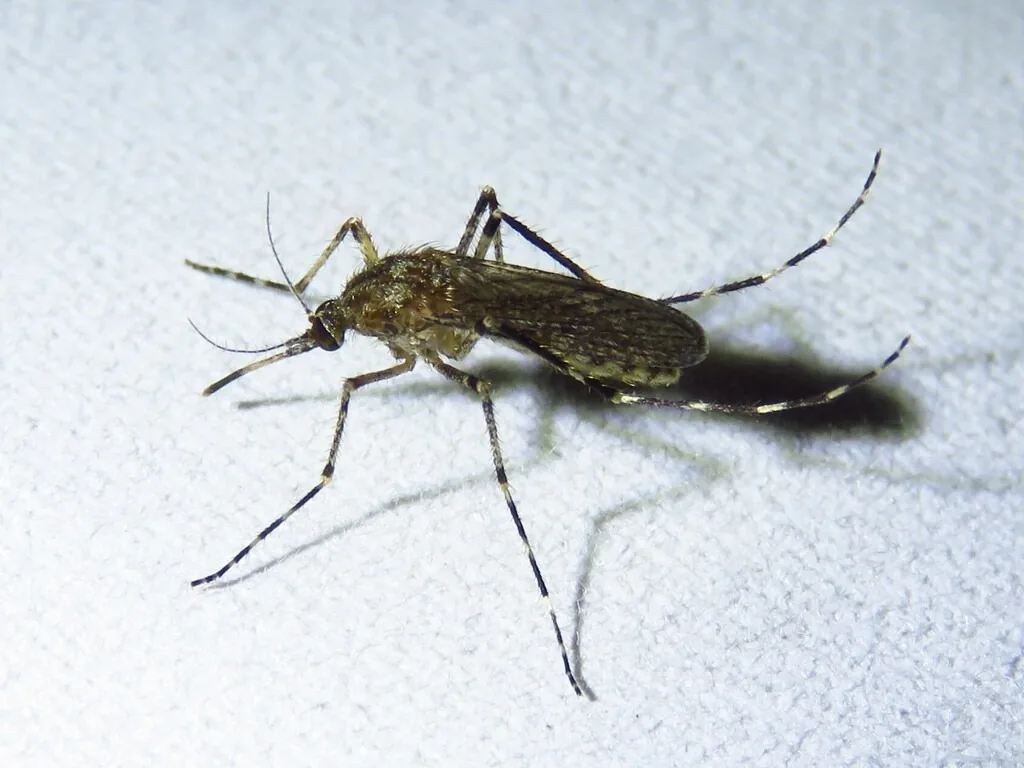
How to identify it
Where it lives
It's widespread in the eastern half of the U.S. and southern Canada, with some areas in the West.[1]
Biology and life cycle
Eggs are laid in floating rafts near emergent plants.[1]
Adults are most active in early evening but bite by day in shady resting spots.[1]
Health risk
It's known to transmit several disease agents, and there are no human vaccines for West Nile or eastern equine encephalitis viruses.[1]
Control
Prevention
Use protective clothing and mosquito repellent outdoors.[1]
When to call a professional
Larvae resist ordinary larvicides; removing excess cattail growth is often the only effective long-term management.[1]
Common questions
Sources
- University of Florida IFAS Extension (Featured Creatures), “Cattail Mosquito, Coquillettidia perturbans (Featured Creatures).” edis.ifas.ufl.edu/publication/IN1192 (accessed 2026-10-06)
- iNaturalist, “Coquillettidia perturbans taxon page (order and family).” www.inaturalist.org/taxa/259061 (accessed 2026-10-06)