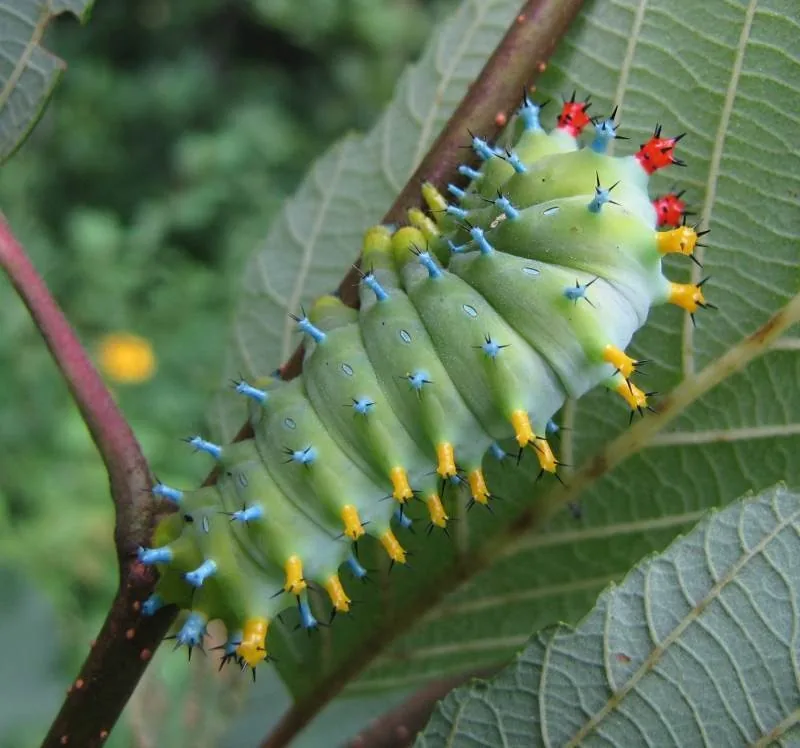
How to identify it
Where it lives
It ranges from Nova Scotia and Maine south to Florida and west to the Rocky Mountains.[1]
Biology and life cycle
Adults sometimes come to lights in spring and early summer.[1]
Damage and signs
- Larvae feed on a wide range of hosts such as maples, birches and alders without being serious pests.[1]
Health risk
It's harmless to people; some populations may be declining.[1]
Control
Prevention
No control is needed; it isn't considered a pest.[1]
Common questions
Sources
- University of Florida IFAS Extension (Featured Creatures), “Cecropia Moth, Hyalophora cecropia (EENY-478).” edis.ifas.ufl.edu/publication/IN861 (accessed 2026-10-06)
- iNaturalist, “Hyalophora cecropia taxon page (order and family).” www.inaturalist.org/taxa/81582 (accessed 2026-10-06)