How to identify it
- Larvae are 0.33 to 0.4 inch long, pale gray to flesh-colored with small pale spines and a yellowish-brown head.[1]
- The first sign is reddish-brown, gum-like resin oozing from the bark, often mixed with droppings and silk.[1]
- Soft, sawdust-like frass tubes about 1/4 inch long cluster at the trunk base, where branches meet the trunk and at graft unions.[1]
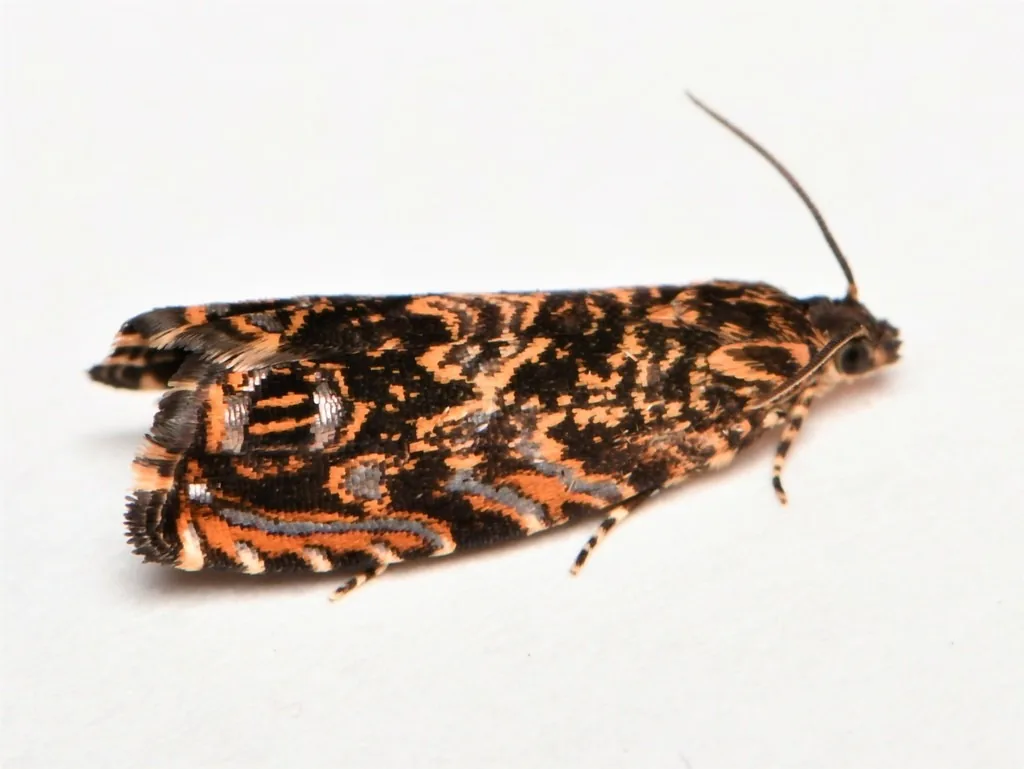
- Adults are small moths about 1/3 inch across the wings, mottled yellow, cream and brown.[1]
Where it lives
First found in North America in British Columbia in 1989, it reached Centralia, Washington, by 1998 and is slowly moving south; it hasn't been seen spreading east, possibly because of the Cascades.[1]
Biology and life cycle
Larvae overwinter under bark, feed again in spring and pupate in silk tubes that stick out from the bark.[1]
Moths fly from late April to September, mostly in early morning, and lay eggs singly or in twos and threes on bark, mainly at wounds.[1]
Hatching larvae enter through natural or mechanical wounds and feed on the living bark tissue, never the hardwood.[1]
It attacks most woody ornamental trees and shrubs in the rose family.[1]
Damage and signs
- Feeding on the cambium cuts the tree's nutrient supply and leaves it open to disease, insects, cold injury and other stress; it can kill the tree.[1]
Health risk
It feeds on plants; the PNW Insect Management Handbook mentions no risk to people.[1]
Control
Prevention
Check susceptible trees regularly for frass tubes, and confirm larvae before acting, since other insects cause similar damage.[1]
Avoid unneeded pruning cuts and injuries, and keep trees healthy with proper watering, fertilizing and pruning; stressed trees attract it.[1]
Sanitation
Remove heavily infested branches or trees.[1]
Biological control
Some wasps parasitize the larvae but don't control it well yet; avoid sprays that would disrupt them.[1]
Common questions
Sources
- Pacific Northwest Pest Management Handbooks (OSU, WSU, University of Idaho), “Cherry, flowering (Prunus): Cherry bark tortrix (Insect Management Handbook).” pnwhandbooks.org/insect/hort/landscape/hosts-pests-landscape-plants/cherry-flowering-prunus-cherry-bark-tortrix (accessed 2026-10-06)
- iNaturalist, “Enarmonia formosana taxon page (order and family).” www.inaturalist.org/taxa/320540 (accessed 2026-10-06)