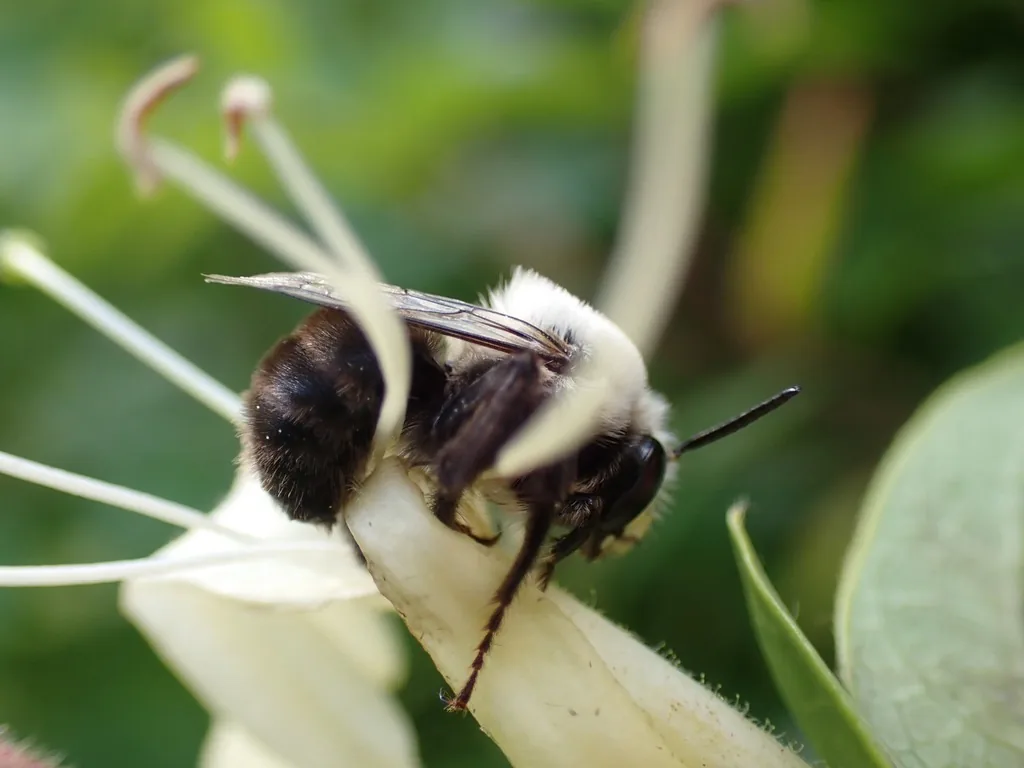
How to identify it
Look-alikes
| Look-alike | How to tell them apart |
|---|---|
| Ground-nesting bumble bees | Chimney bees are solitary: each female cares only for her own nest.[1] |
Where it lives
It ranges from Texas to the East Coast and from Florida into Canada, though Florida records have been uncommon since the 1980s.[1]
Biology and life cycle
Adults emerge from March to late June depending on region, males first.[1]
Nests cluster together like a small village, each with its own turret.[1]
Health risk
They're not aggressive or defensive of nests; they may bite if roughly handled.[1]
Control
Prevention
They're docile, beneficial pollinators that shouldn't be considered a threat; they may pollinate tomato, blackberry and raspberry.[1]
Common questions
Sources
- University of Florida IFAS Extension (Featured Creatures), “Miner Bee, Chimney Bee, Anthophora abrupta (EENY-512).” edis.ifas.ufl.edu/publication/IN912 (accessed 2026-10-06)
- iNaturalist, “Anthophora abrupta taxon page (order and family).” www.inaturalist.org/taxa/134150 (accessed 2026-10-06)