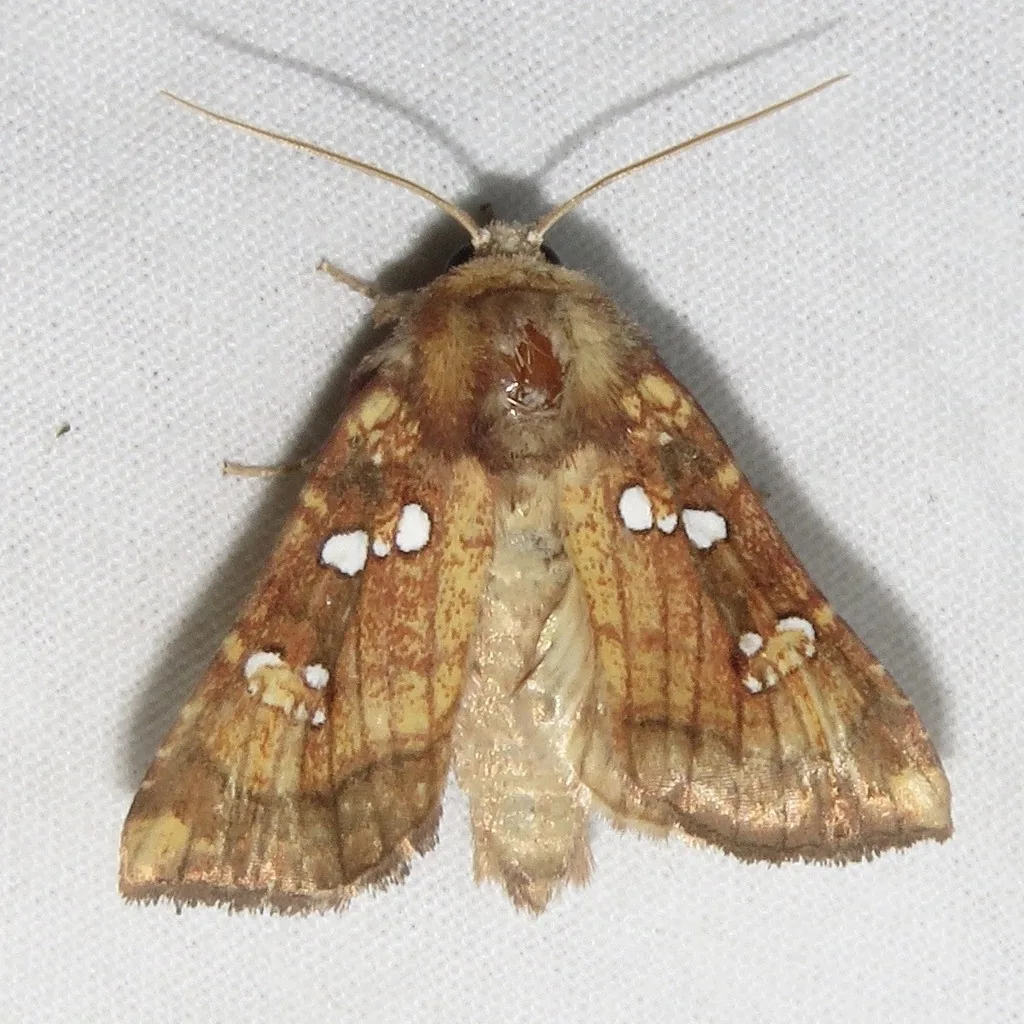
How to identify it
Where it lives
Iowa State and South Dakota State Extension both report it; SDSU tracks its movement into corn with degree days.[1][2]
Biology and life cycle
Moths lay eggs in fall on grasses and weeds; the eggs hatch very early in spring, and the young caterpillars bore into grass stems.[1]
In mid to late June, caterpillars outgrow the grass stems and move to larger plants nearby, sometimes moving again to another host.[1]
SDSU uses degree days above 41°F: eggs begin hatching at about 575 degree days, 10 percent of caterpillars start moving to corn at 1,300, and half have moved by 1,400.[2]
Damage and signs
Health risk
None to people or pets.[1]
Control
Prevention
Keep weeds and tall grass mowed around gardens and flower beds, especially in fall, so moths have no place to lay eggs.[1]
Traps and physical control
Plants can sometimes be saved by slicing the stem open and removing the borer by hand; remove and destroy wilted plants, which can harbor more borers.[1]
Pesticides
Insecticide sprays and dusts used in the garden are not effective against borers inside stems.[1]
Common questions
- Why did my tomato plant suddenly wilt?
- One possible cause is a common stalk borer tunneling inside the stem.[1]
- Will spraying kill stalk borers?
- No; garden sprays and dusts don't reach borers inside the stem.[1]
- How do I prevent stalk borers?
- Mow weeds and tall grass around the garden, especially in fall, since moths lay their eggs there.[1]
Sources
- Iowa State University Extension and Outreach (Yard and Garden), “Common Stalk Borer.” yardandgarden.extension.iastate.edu/encyclopedia/common-stalk-borer (accessed 2026-10-15)
- South Dakota State University Extension, “Common Stalk Borer Activity Estimate: June 5, 2024.” extension.sdstate.edu/common-stalk-borer-activity-estimate-june-5-2024 (accessed 2026-10-15)
- iNaturalist, “Papaipema nebris taxon page (order and family).” www.inaturalist.org/taxa/1654142 (accessed 2026-10-06)