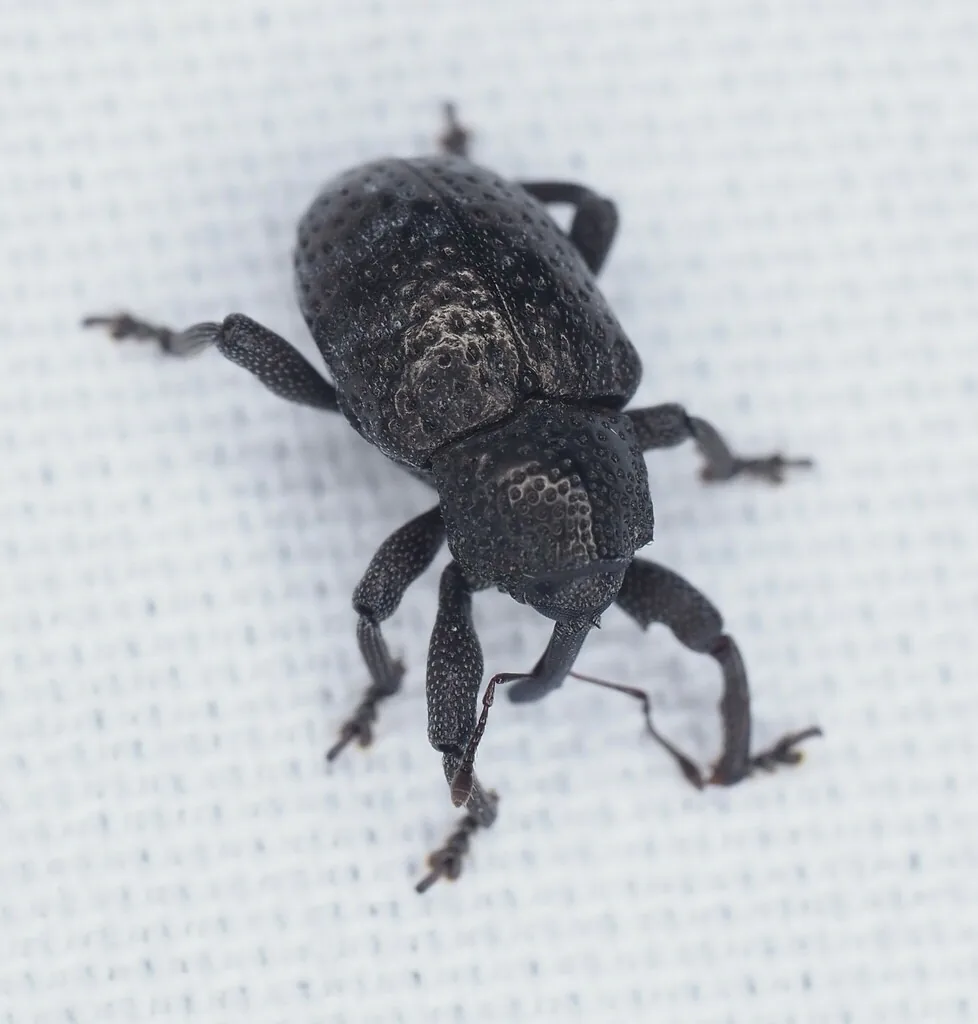
How to identify it
Where it lives
It occurs mainly from Virginia to Florida and west to Texas and Oklahoma.[1]
Biology and life cycle
Adults overwinter in soil and debris, emerge in April or May, and lay eggs once cowpea pods appear, often June or July.[1]
There are two generations in Alabama and one in Virginia.[1]
Damage and signs
- Adults and larvae feed on seeds inside pods of cowpea, snap bean, lima bean and pea.[1]
Health risk
It feeds on plants; UF/IFAS mentions no risk to people.[1]
Control
Prevention
Watch plants in the morning and early evening, when adults are most active.[1]
Common questions
Sources
- University of Florida IFAS Extension (Featured Creatures), “Cowpea Curculio, Chalcodermus aeneus (EENY-223).” edis.ifas.ufl.edu/publication/IN380 (accessed 2026-10-06)
- iNaturalist, “Chalcodermus aeneus taxon page (order and family).” www.inaturalist.org/taxa/304953 (accessed 2026-10-06)