How to identify it
- Caterpillars are smooth with very few hairs and grow to about 1 to 2 inches.[2][1]
- They curl into a tight C shape when disturbed.[1][2]
- Colors range from brown, tan or gray to pink, green or black, and many have markings that blend in with soil.[2][1]
- The black cutworm is greasy gray with several black bumps on each segment and may tunnel into soil, dragging plant parts with it.[1]
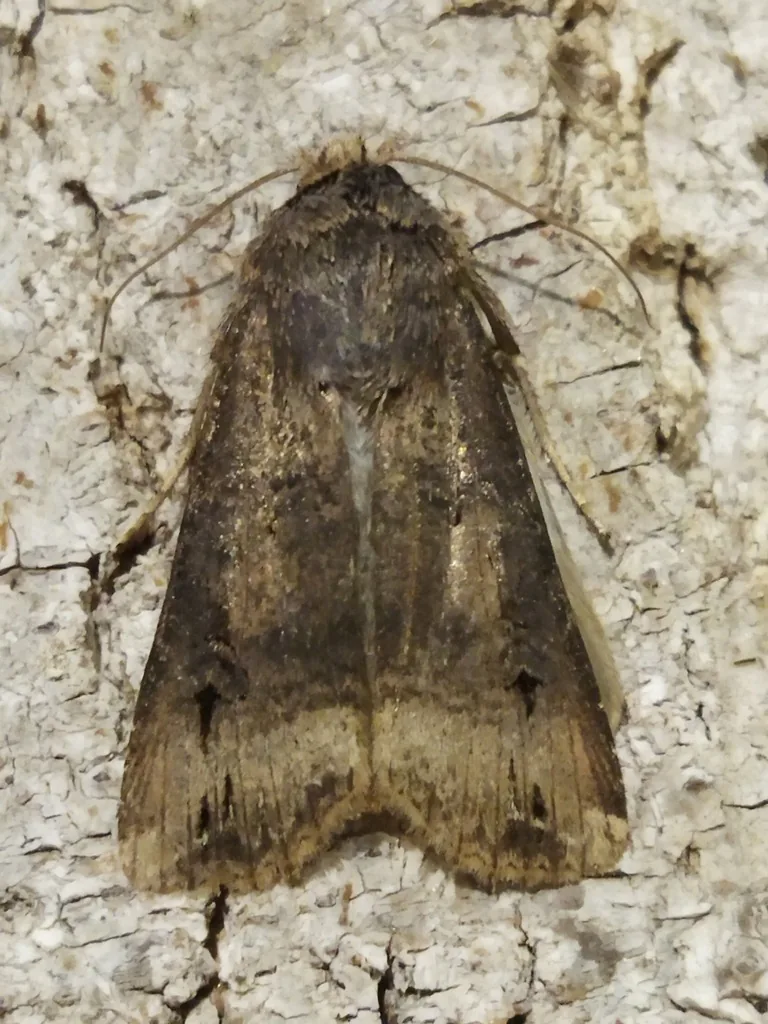
- Adults are generic gray-brown moths about 1 inch long, with patterned forewings darker than the hind wings.[2]
Look-alikes
Where it lives
Which species you see depends on region. In Minnesota, black and variegated cutworms fly in from the south each spring, while dingy, bronzed and glassy cutworms are native and overwinter there.[2]
Biology and life cycle
Females lay hundreds of eggs, singly or in small clusters, on or near low-growing plants, weeds and plant residue.[2]
Young larvae feed on leaves or small roots until about 1/2 inch long, then start cutting through seedling stems.[2]
They feed in the evening and at night and hide in soil or debris by day, so it's common to find clipped plants but no caterpillars.[2][1]
Some species may have up to three generations a year, but they are rarely a problem after spring.[2][1]
Damage and signs
- Cutworms curl around a stem and chew through it just above the soil; partly cut plants wilt.[2]
- They attack most garden crops, including beans, cabbage, carrots, lettuce, peppers, potatoes and tomatoes, and a few species feed on turfgrass.[2][1]
- Some species chew holes in leaves, bore into lettuce or cabbage heads, or eat into young fruit.[1]
Health risk
Cutworms are plant pests. The moths don't damage plants, and the caterpillars feed only on plants.[2][1]
Control
Prevention
Plant a few extra seedlings to allow for losses, use sturdy transplants, and till before planting to expose overwintering larvae.[1][2]
Keep them out
Put cardboard or foil collars around transplants, pushed a few inches into the soil and extending several inches above it.[2][1]
Sanitation
Remove crop residue and keep the garden weed-free, especially over winter, to cut down on egg-laying sites.[1][2]
Traps and physical control
Hand-pick at night with a flashlight, or search the soil within a foot of damaged plants and drop caterpillars into soapy water.[1][2]
Pesticides
Pesticides are usually not needed in home gardens; Bacillus thuringiensis or spinosad sprays can protect larger plants.[2][1]
Common questions
- What is cutting my seedlings off at the ground overnight?
- Most likely cutworms. Check the soil around damaged plants in the evening for C-shaped caterpillars; black cutworms may leave a small hole nearby.[2][1]
- Do cutworm collars really work?
- Yes. A collar pushed into the soil and standing a few inches high blocks most cutworm species from reaching the stem.[2]
Sources
- University of California Statewide IPM Program, “Cutworms (Pest Notes, Home and Landscape).” ipm.ucanr.edu/home-and-landscape/cutworms/ (accessed 2026-10-06)
- University of Minnesota Extension, “Cutworms (Yard and Garden Insects).” extension.umn.edu/yard-and-garden-insects/cutworms (accessed 2026-10-06)
- iNaturalist, “Agrotis ipsilon taxon page (order and family).” www.inaturalist.org/taxa/126276 (accessed 2026-10-06)