How to identify it
Where it lives
NC State and UMass Extension both report it on dogwoods; there is one generation a year.[1][2]
Biology and life cycle
Adults emerge from May to July; females insert up to 100 or more eggs in groups on leaf undersides, often along the veins, each egg making a small bump that turns brown.[1][2]
Larvae feed in groups, first skeletonizing leaves, then eating everything but the midrib.[1][2]
Full-grown larvae wander to find decaying or soft wood, including logs, landscape timbers and even lawn furniture, where they make cells to overwinter and pupate in spring.[1][2]
Damage and signs
Health risk
Control
Traps and physical control
Shake small larvae from the plant and crush them.[1]
Pesticides
If defoliation warrants it, insecticidal soap or horticultural oil works as long as larvae are under an inch long; older larvae are very tough.[1]
Common questions
- What are the white waxy worms eating my dogwood leaves?
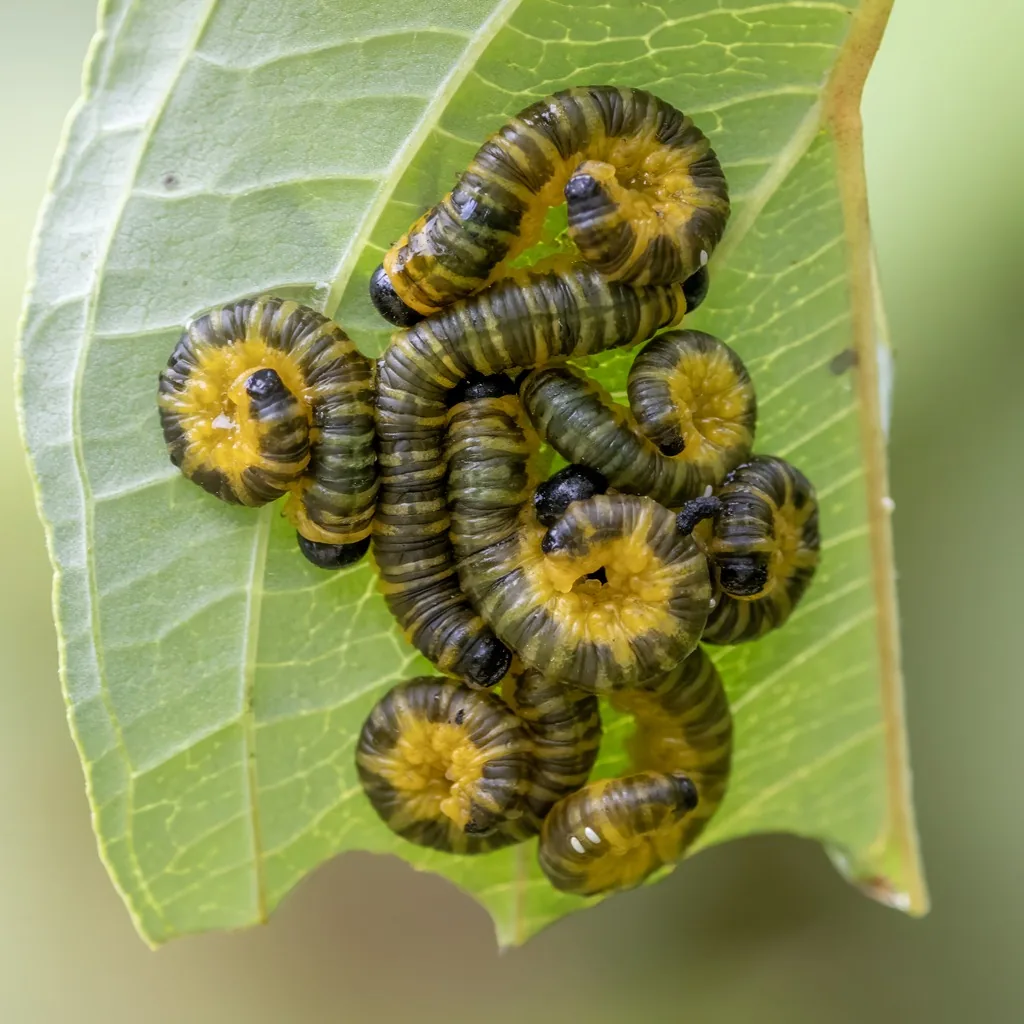
- Young dogwood sawfly larvae, which later turn cream with black spots and then yellow and black.[1][2]
- How many generations of dogwood sawfly are there?
- One a year; adults emerge from late May to July.[1][2]
- Why are larvae boring into my deck or landscape timbers?
- Full-grown dogwood sawfly larvae tunnel into soft or decaying wood to spend the winter.[1][2]
Sources
- NC State Extension, “Dogwood Sawfly (PDIC Factsheet).” content.ces.ncsu.edu/dogwood-sawfly (accessed 2026-10-15)
- UMass Extension Landscape, Nursery and Urban Forestry Program (Landscape Insect & Mite Guide), “Macremphytus tarsatus (Dogwood Sawfly).” www.umass.edu/agriculture-food-environment/landscape/publications-resources/insect-mite-guide/macremphytus-tarsatus (accessed 2026-10-15)
- iNaturalist, “Macremphytus tarsatus taxon page (order and family).” www.inaturalist.org/taxa/143431 (accessed 2026-10-06)