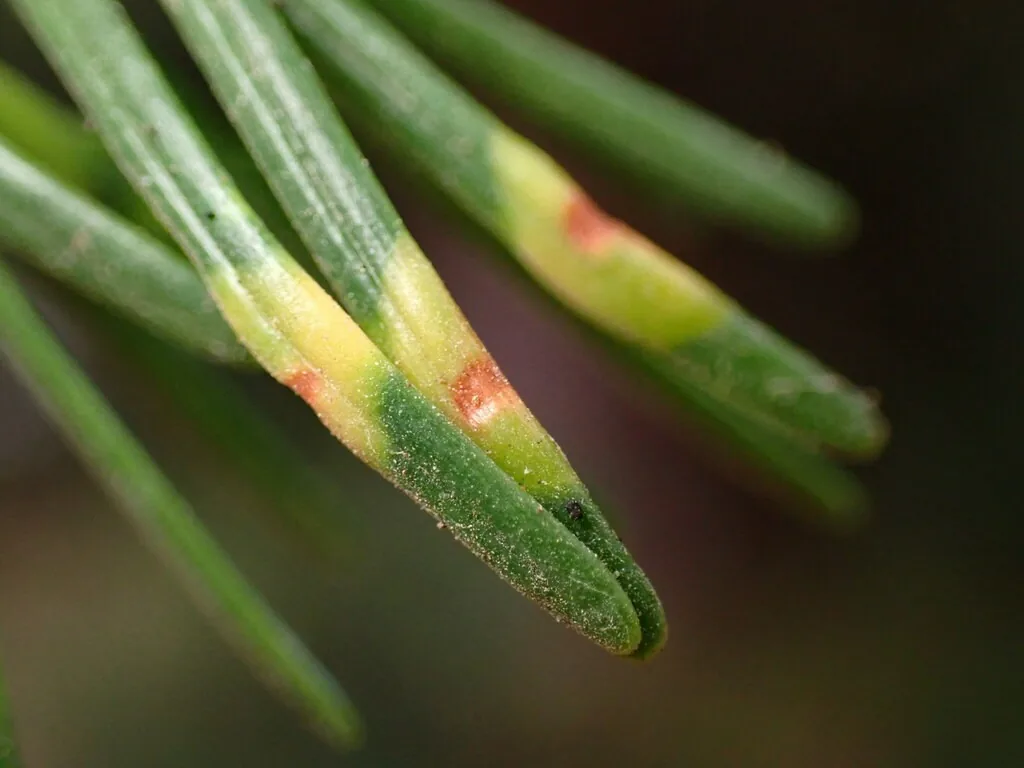
How to identify it
Where it lives
The PNW Insect Management Handbook covers them on Douglas-fir in the Pacific Northwest, where they're most significant in Christmas tree plantations.[1]
Biology and life cycle
Midges pupate in the ground, and adults emerge around budbreak in spring to lay eggs on new growth.[1]
Larvae mine the needles through summer, then drop to the ground at summer's end to pupate; there's one generation a year.[1]
Damage and signs
- Damaged needles often drop, and heavy infestations can cause severe defoliation, though they're less of a problem in landscapes and wooded stands.[1]
Health risk
It feeds on plants; the PNW Insect Management Handbook mentions no risk to people.[1]
Control
Traps and physical control
Prune out heavily infested twigs and branches.[1]
Common questions
Sources
- Pacific Northwest Pest Management Handbooks (OSU, WSU, University of Idaho), “Douglas-fir (Pseudotsuga): Douglas-fir needle midge (Insect Management Handbook).” pnwhandbooks.org/insect/hort/landscape/hosts-pests-landscape-plants/douglas-fir-pseudotsuga-douglas-fir-needle-midge (accessed 2026-10-06)
- iNaturalist, “Contarinia pseudotsugae taxon page (order and family).” www.inaturalist.org/taxa/208526 (accessed 2026-10-06)