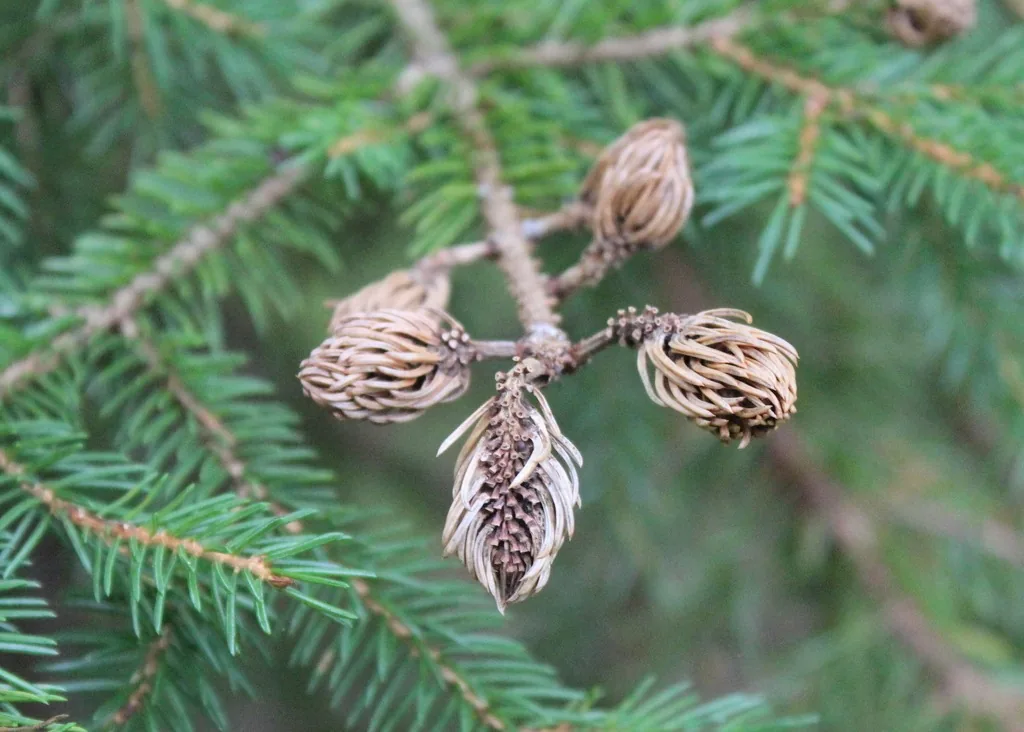
How to identify it
Where it lives
It's a key pest of Norway spruce in the northeastern US, occasionally on white, red and Colorado blue spruce.[1]
Biology and life cycle
Female nymphs overwinter at bud bases; each adult lays 100 to 200 eggs as buds open.[1]
Nymphs feed in the buds, and their feeding makes a gall form where needles should develop.[1]
Damage and signs
- Infested trees are seldom killed, but their looks can suffer greatly.[1]
Health risk
It feeds on plants; Penn State Extension mentions no risk to people.[1]
Control
Traps and physical control
On a few small trees, prune and destroy green galls in June or July, before they open.[1]
Pesticides
Dormant horticultural oil, or treatment mid-September to early October or in April before budbreak, targets overwintering stages.[1]
Common questions
Sources
- Penn State Extension, “Eastern Spruce Gall Adelgid.” extension.psu.edu/eastern-spruce-gall-adelgid (accessed 2026-10-06)
- iNaturalist, “Adelges abietis taxon page (order and family).” www.inaturalist.org/taxa/204565 (accessed 2026-10-06)