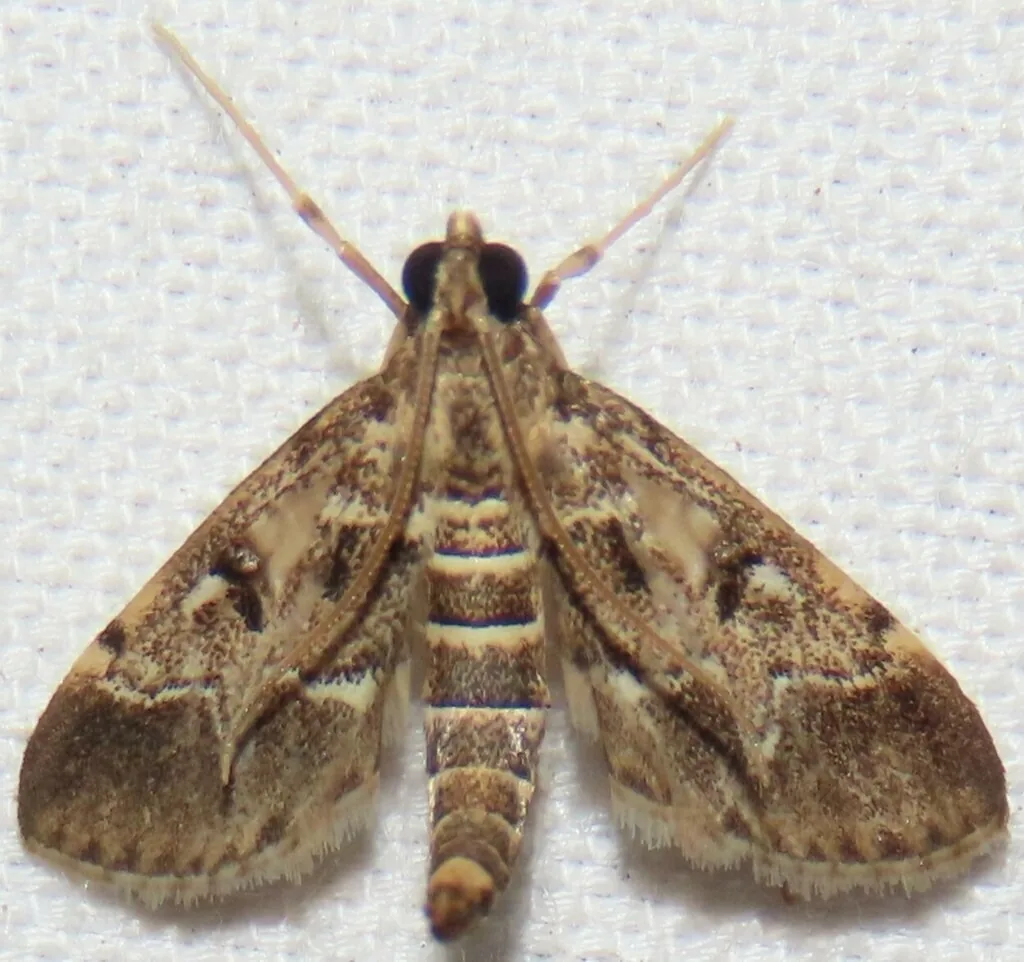
How to identify it
Where it lives
Native to southern Europe and North Africa, it was found in 15 US states by the 2012 fact sheet, after a 2010 rediscovery.[1]
Biology and life cycle
Larvae prefer moist spots and feed on debris as well as live plants, pupating in a messy cocoon of silk and soil.[1]
At 68 degrees F the cycle takes about six weeks, allowing seven or eight generations a year in heated greenhouses.[1]
Damage and signs
- Young larvae make round or crescent holes in leaves; older ones eat whole leaves, feed below the soil, or bore into and girdle stems.[1]
Health risk
It feeds on plants; UK Extension mentions no risk to people.[1]
Control
Prevention
Remove debris and lower leaves and use drier growing media to cut the moist habitat larvae favor.[1]
Keep them out
Inspect new plants, pots and soil surfaces for webbing and chewing, and keep new stock isolated when possible.[1]
Biological control
Bt, insect-killing nematodes, Trichogramma wasps and predatory mites are commercially available natural enemies for European pepper moth.[1]
Common questions
Sources
- University of Kentucky Entomology (ENTFACT), “European Pepper Moth (ENTFACT-324).” entomology.mgcafe.uky.edu/ef324 (accessed 2026-10-06)
- iNaturalist, “Duponchelia fovealis taxon page (order and family).” www.inaturalist.org/taxa/371745 (accessed 2026-10-06)