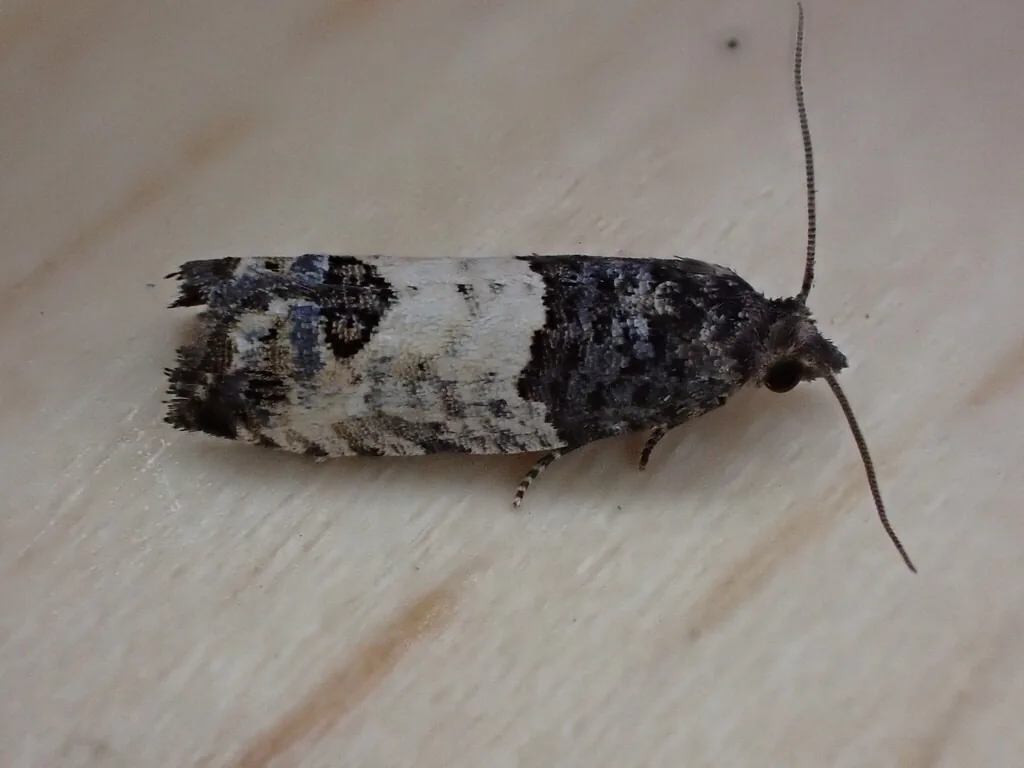
How to identify it
Where it lives
The PNW Insect Management Handbook covers it on apples and hazelnuts in the Pacific Northwest.[1]
Biology and life cycle
Larvae spend winter in cocoons on the bark in the crotches of small limbs and become active around budbreak.[1]
They feed in nests of webbed leaves, pupate there, and moths emerge in early to midsummer.[1]
Eggs are laid under leaves; the new larvae feed there until early August, then build their winter cocoons.[1]
Damage and signs
- Larvae feed on leaves and buds inside webbed nests.[1]
Health risk
It feeds on plants; the PNW Insect Management Handbook mentions no risk to people.[1]
Control
Prevention
Look for larvae in nests of webbed-together leaves in spring; treatment is rarely necessary.[1]
Pesticides
The handbook lists carbaryl for home use if needed and notes it's highly toxic to bees.[1]
Common questions
Sources
- Pacific Northwest Pest Management Handbooks (OSU, WSU, University of Idaho), “Apple: Eyespotted bud moth (Insect Management Handbook).” pnwhandbooks.org/insect/tree-fruit/apple/apple-eyespotted-bud-moth (accessed 2026-10-06)
- iNaturalist, “Spilonota ocellana taxon page (order and family).” www.inaturalist.org/taxa/231405 (accessed 2026-10-06)