πŸ¦— Sand Flea β€” ID Guide

Multiple species Β· Crustacea / Siphonaptera

'Sand flea' means four different things depending on where you are. Knowing which one you're dealing with determines whether treatment even makes sense.

Sand FleaBeachID GuideNo-See-UmsMisidentificationCoastal
πŸ¦—
Risk Level
Beach / Coastal Pest
πŸ“ FIELD GUIDE ILLUSTRATION
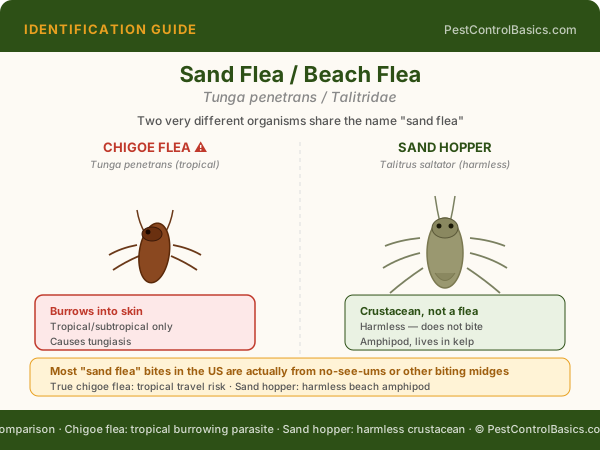
Sand Flea identification illustration with labeled anatomical features β€” PestControlBasics.com

Original illustration by PestControlBasics.com. Use anatomical labels above to confirm your identification. For photo references, see the identification section below.

πŸ”¬
PestControlBasics Editorial Team
Reviewed by Derek Giordano Β· Updated 2026

πŸ” Identification

Option 1 β€” Chigoe flea (Tunga penetrans): True flea; burrows into feet and toes; causes tungiasis; tropics only β€” not in continental US. Option 2 β€” Sand crab / mole crab (Emerita): Small crustacean in surf zone; harmless; doesn't bite. Option 3 β€” Biting midges / no-see-ums (Culicoides): Most common cause of 'sand flea bites' in US; tiny biting flies near sand; leave intensely itchy welts. Option 4 β€” Cat flea or dog flea: Actual fleas picked up from beach-visiting pets or wildlife.

🧬 Biology & Behavior

In the continental US, 'sand flea bites' are almost always biting midges (no-see-ums) or actual cat/dog fleas β€” not chigoe fleas (which require tropical regions). No-see-ums breed in wet organic material at beach margins and bite exposed skin, leaving clusters of intensely itchy welts that persist 1-2 weeks. The bites appear differently than mosquito bites β€” smaller, more intensely itchy, often in clusters on ankles and lower legs.

⚠️ Damage & Health Risk

Intensely itchy bite clusters (midges); secondary infection from scratching; psychological concern; tungiasis (burrowing chigoe flea β€” tropics only).

πŸ”§ DIY Treatment

For midge bites: DEET or picaridin before beach exposure; wear light-colored clothing covering ankles; avoid beach at dawn/dusk when midges peak; fan creates enough airflow to prevent landing. For actual flea bites: treat pet and environment as standard flea protocol.

πŸ‘· When to Call a Pro

Never warranted for midge bites specifically β€” prevention through repellent is the approach.

❓ FAQ

What's actually biting me at the beach?
In the continental US: almost certainly biting midges (Culicoides no-see-ums) rather than true fleas. The telltale signs are: extremely itchy bites that are smaller than mosquito bites, appearing in clusters on exposed skin, at dusk or dawn, near wet sandy areas. DEET applied before beach exposure prevents these bites effectively.
Are sand fleas dangerous?
In the continental US, biting midges are a nuisance but don't transmit significant human pathogens. The chigoe flea (tungiasis) is a serious medical concern but only in tropical regions not found in the continental US. If you develop a painful nodule at a bite site on your foot after travel to tropical areas, see a doctor β€” that could be tungiasis.

πŸ“š More on This Topic

Related guides and profiles:

πŸ”— FleasπŸ”— Flea Life Cycle β€” The 95% Problem You're MissingπŸ”— πŸ¦— Cat FleaπŸ”— How to Eliminate Fleas From Your Home Permanently
🧪 Recommended Treatment Products
Flea Treatment Guide Methoprene IGR Beneficial Nematodes Permethrin
Full product guides with mixing rates and safety info. → Browse All 130 Pesticide Guides
🔗 Related Pests
Rat Flea Fleas Sand Flea
Compare similar pests to confirm your identification. → Use our ID Flowchart
πŸ“š Sources: EPA Flea Control Β· CDC Flea-Borne Diseases
Published: Jan 1, 2025 Β· Updated: Apr 7, 2026

πŸ—ΊοΈ US Distribution β€” Sand Flea

image/svg+xml
Common Occasional Not Present
States Present
51
Occasional
0
Primary Region
All 50 states
πŸ“Š Source: University extension services, USDA, CDC vector data, and published entomological surveys.