Pest profile

Florida SLE mosquito

Culex nigripalpus Β· Diptera: Culicidae[2]

Culex nigripalpus is the most important disease-carrying mosquito in Florida, the main vector of St. Louis encephalitis virus.[1]

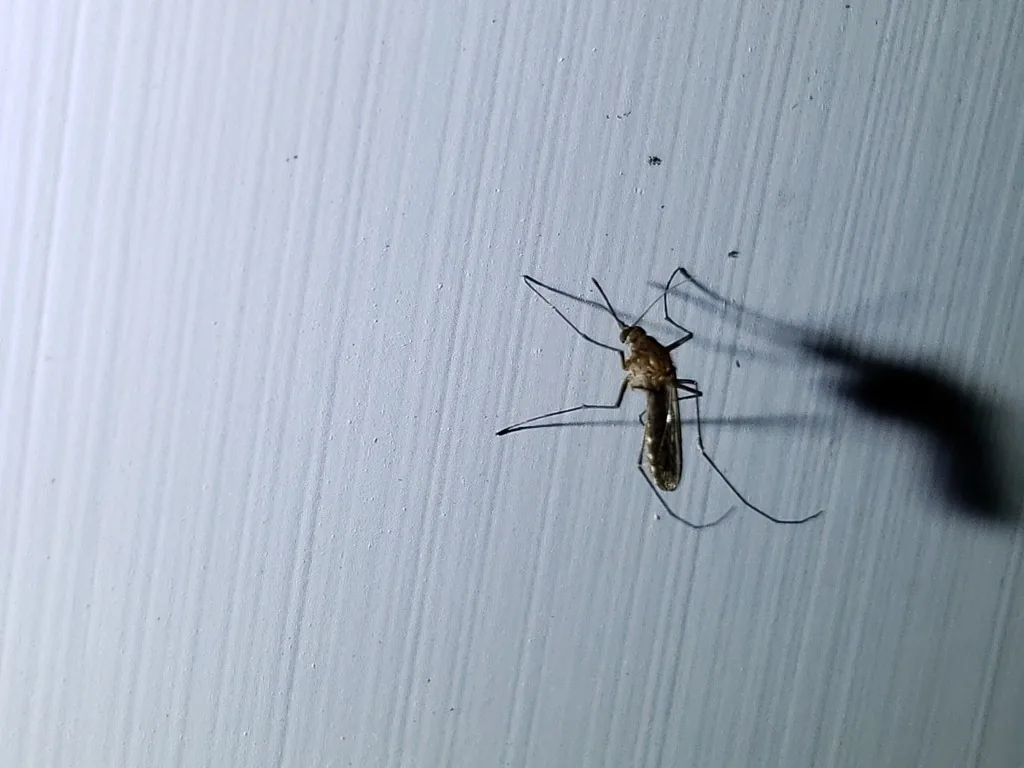
Florida SLE mosquito, a dark brown mosquito with no obvious markings, resting on a pale wall
Florida SLE mosquito, a dark brown mosquito with no obvious markings, resting on a pale wall. (c) Tyler Bishop, some rights reserved (CC BY) β€” via iNaturalist, CC BY 4.0

How to identify it

  • It's a medium-sized, dark brown mosquito with fine bronze-to-brown scales on the thorax.[1]
  • It has no obvious distinguishing marks, so identifying it in the field is extremely difficult.[1]

Where it lives

It ranges from North Carolina to Texas and up the Mississippi basin to Kentucky; it's in all 67 Florida counties, most abundant in central and south Florida.[1]

US map: public records from 4 states since 1990 (GBIF).

Biology and life cycle

Females lay eggs at night, preferring freshly flooded roadside ditches and farm furrows.[1]

Long periods below freezing kill adults and larvae.[1]

Health risk

It was the only mosquito vector of consequence in Florida's major St. Louis encephalitis epidemics and is a minor vector of eastern equine encephalitis.[1]

Control

When to call a professional

Mosquito control programs monitor it closely, aiming to predict human St. Louis encephalitis cases.[1]

Common questions

Which mosquito spreads St. Louis encephalitis in Florida?
Mainly Culex nigripalpus, the Florida SLE mosquito.[1]
Can I recognize it by sight?
Not easily; it's a nondescript dark brown mosquito.[1]

Sources

  1. University of Florida IFAS Extension (Featured Creatures), β€œThe Florida SLE Mosquito, Culex nigripalpus (Featured Creatures).” edis.ifas.ufl.edu/publication/IN136 (accessed 2026-10-06)
  2. iNaturalist, β€œCulex nigripalpus taxon page (order and family).” www.inaturalist.org/taxa/294261 (accessed 2026-10-06)

Updated 2026-10-14. Built from sourced records. Spot an error? Tell us.