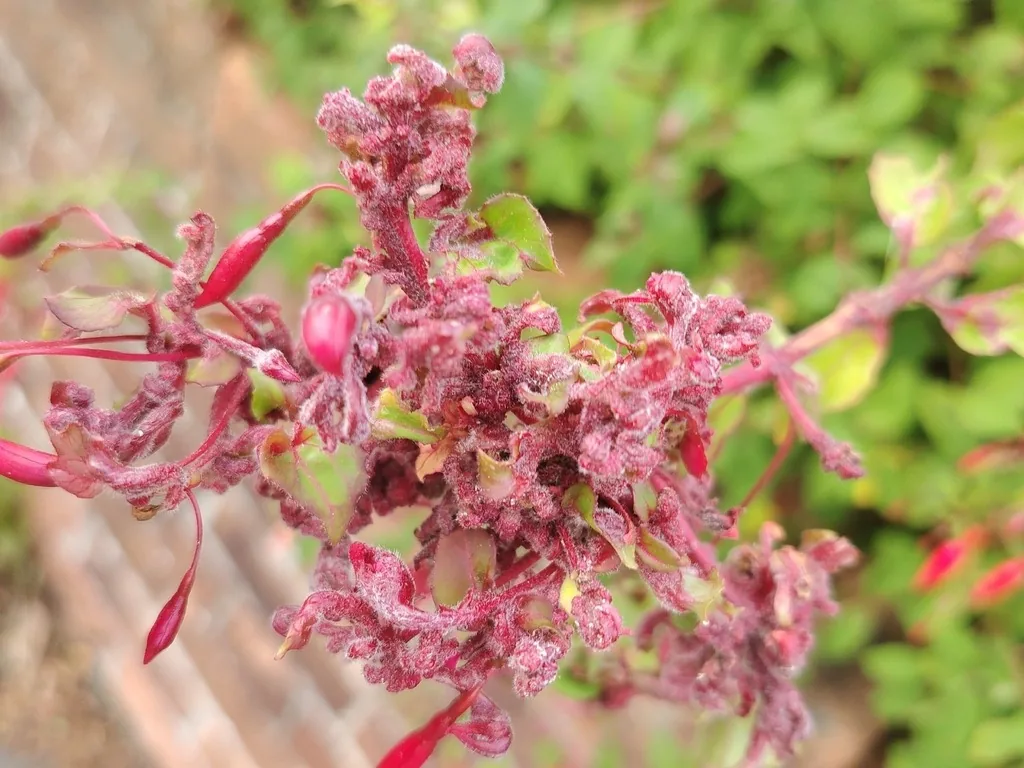
How to identify it
Where it lives
It's mainly a problem in cool coastal areas, such as coastal California, and on fuchsias grown indoors.[1][2]
Biology and life cycle
Mites live and breed inside galled tissue, then move up to attack new growth and flowers.[2][1]
Each female lays about 50 eggs, and a generation takes about three weeks; there are several a year.[2]
They spread on wind, pollinating insects and birds, and on infested plants, clothing, hands and tools.[1][2]
Damage and signs
- Feeding distorts and thickens leaves and shoot tips, reduces flowering and, when mites are abundant, can stop new growth.[2]
Health risk
It feeds on plants; the PNW Insect Management Handbook and UC IPM mention no risk to people.[1][2]
Control
Prevention
Grow resistant fuchsias, since cultivars differ widely, and get plants from a quality supplier rather than swapping cuttings.[1][2]
Sanitation
Prune off and destroy infested parts away from other plants, and don't compost them.[2][1]
Wash hands, change clothes and clean tools with alcohol after handling infested plants.[2][1]
Biological control
Predatory mites, especially Neoseiulus californicus, help, but biological control isn't satisfactory on the most susceptible cultivars.[1][2]
Pesticides
After pruning, UC IPM suggests horticultural oil or insecticidal soap at intervals such as 2 to 3 weeks apart.[2]
Common questions
Sources
- Pacific Northwest Pest Management Handbooks (OSU, WSU, University of Idaho), “Fuchsia (Fuchsia): Fuchsia gall mite (Insect Management Handbook).” pnwhandbooks.org/insect/hort/landscape/hosts-pests-landscape-plants/fuchsia-fuchsia-fuchsia-gall-mite (accessed 2026-10-06)
- University of California Statewide IPM Program, “Fuchsia Gall Mite (Pest Notes).” ipm.ucanr.edu/home-and-landscape/fuchsia-gall-mite/ (accessed 2026-10-06)
- iNaturalist, “Aculops fuchsiae taxon page (order and family).” www.inaturalist.org/taxa/700942 (accessed 2026-10-06)