πŸͺ° Fungus Gnat Elimination Protocol

Bradysia spp. Β· Diptera: Sciaridae

Fungus gnats are a watering problem first and a pest problem second. The protocol that eliminates them is simple β€” but most people try the wrong approach first.

Fungus GnatDipteraHouseplantSciaridaeLarvaeRoot Pest
πŸͺ°
Risk Level
Houseplant Pest
πŸ“ FIELD GUIDE ILLUSTRATION
Fungus Gnat Control identification illustration with labeled anatomical features β€” PestControlBasics.com

Original illustration by PestControlBasics.com. Use anatomical labels above to confirm your identification.

πŸ”¬
PestControlBasics Editorial Team
Reviewed by Derek Giordano Β· Updated 2026

πŸ” Identification

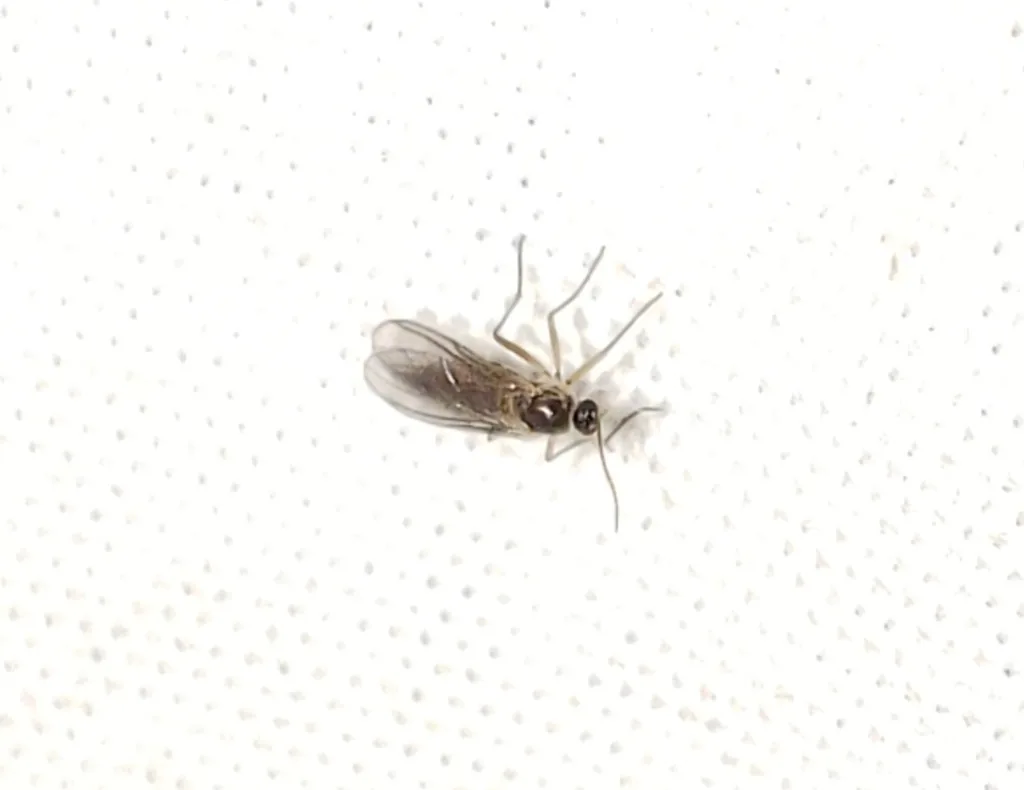
Adults: 2-4mm; dark, slender, long-legged; Y-shaped wing vein; weak fliers that run on soil surface. Larvae: white maggots with shiny black head capsule; in moist potting soil top inch. Present in all life stages simultaneously in infested plants.

🧬 Biology & Behavior

The life cycle in potting soil takes 3-4 weeks. Adults live 7-10 days and lay 100-300 eggs each in moist soil. Larvae feed on fungal mycelium and plant roots. The entire problem is driven by overwatering β€” larvae cannot survive in dry soil.

⚠️ Damage & Health Risk

Adults are nuisance only. Larvae damage roots of seedlings and young plants; cause wilting; root rot pathogen vector in commercial operations.

πŸ”§ DIY Treatment

Three-step protocol:
1. Bti drench (Mosquito Bits): soak bits in water 30 min, strain, use water to irrigate. Apply every 2 weeks for 6 weeks. Kills larvae within 24-48 hours.
2. Dryout: Let soil dry completely (top 2 inches) between waterings. Larvae die in dry soil within 24-48 hours.
3. Yellow sticky traps: Place at soil surface to catch adults and monitor progress.
Why sprays fail: aerial sprays kill adults but larvae in soil continue hatching. Only soil treatment works.

πŸ‘· When to Call a Pro

Rarely warranted for houseplant fungus gnats.

❓ FAQ

Why doesn't spraying kill fungus gnats?
Adult sprays kill flying adults but larvae in the soil continue hatching into new adults. The soil is the breeding site β€” you need to treat there. Bti in the soil and letting soil dry out eliminates larvae, which is the only permanent solution.
Can I use hydrogen peroxide to kill fungus gnat larvae?
A diluted hydrogen peroxide drench (1 part 3% H2O2 to 4 parts water) kills fungus gnat larvae on contact. It foams when it contacts organic material in soil. This works but can stress some sensitive plants. Bti is gentler on plants.
DG
Derek Giordano
Certified Pest Control Operator Β· Former Business Owner
Derek ran his own pest control company in Florida for several years, servicing thousands of regular customers. All content is based on hands-on field experience and current EPA & university extension guidelines.

πŸ—ΊοΈ Geographic Range & Distribution

FactorDetails
U.S. RangeAll or most U.S. states
Regional DetailDistribution varies β€” consult your local extension service for regional prevalence data.

πŸ“… Treatment Timing Guide

Treating at the right time dramatically improves results. Pest control timed to the life cycle uses less product and achieves better long-term control.

PeriodAction
SpringInspection and perimeter treatment before pest season starts.
SummerActive monitoring and targeted treatments as needed.
FallPreventive treatment before overwintering pests seek entry.

πŸ’° Professional Treatment Costs

Service TypeDIY CostProfessional Cost
Initial inspectionFree (self-inspect)$75–$150 (often credited to treatment)
One-time treatment$30–$100 in materials$150–$500
Annual service contractN/A$400–$900/year
Severe infestationOften ineffective alone$500–$2,500+

Prices vary by region, property size, and infestation severity.

❓ Common Questions About Fungus Gnat Elimination Protocol

How do I confirm I actually have this pest (not something similar)?
The most reliable confirmation is a physical specimen β€” capture one and compare to reference images on this page. For cryptic pests (bed bugs, termites), look for secondary signs: frass, shed skins, mud tubes, or bites with a specific pattern. When uncertain, a professional inspection is faster than months of misidentification.
Can I treat this myself or do I need a professional?
DIY is effective for small, accessible infestations caught early. Professionals are worth the cost when: the infestation is inside wall voids or structural elements, multiple rooms are affected, you have health-risk pests (hantavirus, venomous species), or DIY has already failed twice.
How long until the infestation is completely gone?
Expect 3–8 weeks for most infestations with proper treatment. Insects with dormant life stages (pupae, eggs) extend the timeline because those stages are impervious to most insecticides. Follow-up treatments at 2 and 4 weeks catch each new cohort as they emerge.
What's the most common mistake people make treating this pest?
Treating only the visible pest population while ignoring the harborage site, entry point, or breeding location. Killing adults provides temporary relief but the population rebuilds from hidden egg cases, pupae, or new arrivals through unaddressed entry points.
🧪 Recommended Treatment Products
Pyrethrin Aerosol Bti (Drain/Fungus Gnats) IPM Guide
Full product guides with mixing rates and safety info. → Browse All 130 Pesticide Guides
πŸ“š Sources: EPA Termite Guide Β· NPMA Termite Info
Published: Jan 1, 2025 Β· Updated: Apr 7, 2026

Fly identification determines treatment approach

Different fly species require very different treatment because their breeding sites are different. House flies and bottle flies breed in decaying organic matter β€” garbage, animal waste, dead animals β€” and adult control without addressing the breeding site produces continuous reinfestation. Fruit flies breed in fermenting fruit and accumulated organic matter in drains. Drain flies (Psychodidae, often called moth flies) breed in slime accumulation inside drains and sewer lines. Phorid flies (humpbacked flies) breed in moist organic matter and indicate broken sewer lines, dead rodents in walls, or accumulated organic debris. Cluster flies enter homes seeking overwintering shelter in fall and don't breed indoors. Treatment that works for one usually doesn't address the others β€” diagnosis precedes effective treatment.

Why integrated pest management produces better outcomes

Integrated Pest Management (IPM) is the framework most pest management professionals follow and the framework the EPA recommends for residential and commercial settings. IPM is not anti-pesticide; it's a sequencing approach that uses cultural controls (sanitation, exclusion, moisture management) first, mechanical controls (traps, vacuuming, physical removal) second, biological controls (beneficial insects, microbial agents) where applicable, and chemical controls last and targeted. The benefit isn't ideological β€” it's empirical. IPM-treated sites have lower long-term pest pressure than chemical-only treated sites, because chemicals address the visible population without addressing why the population developed. Homeowners who adopt IPM principles see longer intervals between treatments, lower total pesticide use, and better outcomes during the times when chemicals are appropriate. The shift from 'spray when I see them' to 'fix the conditions, monitor, treat targeted' is the single highest-leverage change most DIY practitioners can make.

Fruit fly elimination protocol

Fruit flies appear suddenly during warm months and persist as long as breeding sites are available. Find and eliminate all sources: overripe fruit on counters, fruit residue in compost bins (especially indoor bins), drain residue (run hot water and drain cleaner monthly), recycling containers with sugary residue, mops and cleaning supplies stored damp, plant pot saucers with stagnant water, and rotting onions or potatoes in storage. Adult fly control: apple cider vinegar traps (vinegar in a jar with plastic wrap over the top, several pinholes; flies enter but can't exit) reduce visible adults while breeding sites are being eliminated. Treatment without source elimination produces temporary results; thorough source elimination usually resolves fruit fly problems within a week or two.

Drain fly diagnosis and treatment

Drain flies appear in bathrooms, kitchens, and basements, usually near floor drains or seldom-used sinks. They breed in the biofilm slime accumulated inside drain pipes, garbage disposals, and sewer p-traps that aren't getting regular use. Diagnosis: tape a piece of clear tape over a suspected drain overnight (sticky side down, not sealing the drain completely) β€” adult flies emerging from the drain stick to the tape and confirm the source. Treatment: physical cleaning of the drain interior (a stiff drain brush or bottle brush, drain cleaner, then enzymatic drain treatment for ongoing biofilm reduction) is more effective than insecticide. Seldom-used floor drains in basements often dry out and lose their water seal, allowing flies from sewer lines; pouring water down them weekly maintains the trap and prevents fly migration.

The economics of pest control: where money is best spent

Pest control budgets get distorted by emotional intensity β€” the spend follows fear, not optimization. Looking at the categories where money produces the most durable risk reduction: exclusion work (one-time, durable, low ongoing cost), moisture management (fixing leaks, gutters, grading β€” removes the conditions pests need), and annual inspection (catches problems before they become expensive). Recurring treatment contracts produce real value in high-pressure situations (heavy termite zones, severe rodent pressure, commercial settings) and less value in moderate-pressure suburban settings where quarterly DIY would handle the same load. Equipment investments β€” a quality pump sprayer, a hand duster, a UV flashlight for fluorescent residue checks β€” pay back quickly. Premium products usually don't outperform mid-priced products with the same active ingredient at the same label rate. The right mental model: spend on prevention, structure, and information; spend less on recurring reactive treatment.

Fruit fly source diagnostics: where they're actually coming from

Fruit fly outbreaks have specific sources that range beyond the obvious ripe fruit, and identifying the actual breeding source is more useful than general home cleaning. The most common sources: ripening or damaged fruit (the well-known case), rotting potatoes and onions in storage (often overlooked because they don't smell strongly until well into decay), poorly-cleaned garbage disposals with food residue in the housing, recycling bins with residual liquid from beverage containers, mop heads stored damp, sponges holding food residue, drains in floor traps (rarely used but breeding sites if the seal has dried out), and damp newspaper or cardboard recycling stacks. Apple cider vinegar traps with dish soap surface tension breaker catch adult fruit flies and help confirm elimination β€” declining trap catches over days indicate the breeding source has been removed. Treatment that addresses only adults (sprays, traps alone) without finding and eliminating the breeding source fails to produce durable results.

How treatment thresholds change what 'success' should mean

Most homeowners frame pest control as elimination β€” zero individuals seen β€” but professional programs operate on threshold concepts that better match what's actually achievable and economically reasonable. A treatment threshold is the population level at which intervention is justified; below it, the cost and disruption of treatment outweigh the damage prevented. For aesthetic pests like the occasional ant or spider, the threshold is essentially zero only because tolerance is low, not because zero is biologically realistic. For pests with health implications (cockroaches, rodents) or property damage potential (termites, carpenter ants), thresholds are set well below visible damage to allow time for response. The implication for self-evaluation: a program that drops a cockroach population by 95% without reaching zero may be functioning correctly, and pushing for the last 5% may require disproportionate effort or treatment intensity that creates other problems. Reframing 'success' as durable reduction below threshold rather than absolute zero produces saner program design, more reasonable expectations of paid services, and less wasted DIY effort chasing the long tail of a population that's already controlled in any practical sense.

Drain fly elimination: physical cleaning over chemicals

Drain flies (Psychodidae, also called moth flies) breed in the biofilm that accumulates in drain p-traps, garbage disposals, and overflow drains; they appear as small fuzzy flies near sinks, particularly in bathrooms and basement utility sinks. The diagnostic is taping a clear bag over a suspected drain overnight; emerging adults inside the bag the next morning confirm the source. Treatment focuses on physical removal of the biofilm rather than chemical intervention. The effective protocol: pour boiling water down the drain to loosen biofilm, scrub the inside of the drain pipe with a stiff drain brush (available for a few dollars at hardware stores), apply an enzymatic drain cleaner (not bleach or chemical drain opener, which doesn't address biofilm), repeat for several consecutive days, and address any rarely-used drains that may have lost their water seal and become breeding sites. Bleach treatments and pesticide pour-downs typically don't reach the breeding biofilm and produce poor results. Once treatment is complete, periodic monthly drain maintenance with enzymatic cleaner prevents biofilm rebuild.

Cluster flies and the overwintering pattern that drives them indoors

Cluster flies are sometimes mistaken for house flies but represent a distinct seasonal pest tied specifically to overwintering behavior. Adult cluster flies seek protected indoor spaces in late summer and fall, gathering in attics, wall voids, and unused upper rooms to overwinter in aggregations that can number in the thousands. They re-emerge on warm winter and spring days, often appearing in living spaces and accumulating against windows in numbers that homeowners find startling. The treatment challenge is that by the time flies are visible inside, they're already established in voids that are difficult to reach. Effective management is preventive: identifying and sealing exterior entry points β€” gaps around eaves, ventilation openings, fascia, and roof penetrations β€” in midsummer before flies begin seeking harborage, combined with exterior perimeter treatment of the upper structure with appropriate insecticide. Treatment of the interior aggregations once established is limited; vacuuming is often the most practical response. The species is mostly nuisance rather than health-relevant, but the volume can be significant enough that prevention is worth the investment in properties that have experienced previous cluster fly infestations.

When neighborhood-level coordination matters for treatment

Some pests are house-scale problems and some are neighborhood-scale problems, and treating a neighborhood-scale problem as if it were house-scale leads to a familiar frustration: treatment works, then activity returns within weeks because the source was never inside your property. German cockroach problems in multi-unit buildings are the canonical example β€” treating one unit while the rest of the building is untreated produces temporary relief at best. Rodent infestations frequently span multiple adjacent properties, especially row houses, condo complexes, and dense suburban developments with shared boundary fencing or shared utility easements. Mosquito problems are obviously neighborhood-scale because adult mosquitoes don't respect property lines. The practical implication is that for these pests, isolated treatment is not just incomplete but in some cases economically wasteful. Coordinating with neighbors, talking to HOA or property management about whole-building or whole-block treatment, and identifying the actual sources rather than the symptom locations is what produces durable results. This is uncomfortable work in some neighborhoods, but no amount of treatment intensity in a single unit substitutes for it.

Phorid flies versus fruit flies: the diagnostic distinction matters

Small flies in the kitchen are often called fruit flies generically, but the distinction between fruit flies and phorid flies has major implications for source diagnosis and treatment. Fruit flies are tan to brown, have red eyes, and breed in fermenting fruit and vegetable matter β€” ripe produce, recycling bins, drain residue. Phorid flies are smaller, darker, hump-backed in profile, and characterized by a distinctive jerky walking motion before flight. They breed in decaying organic matter in unusual locations: under refrigerators where spills have congealed, in cracked or broken sewer lines under slabs, in dead rodents in wall voids, in compost or trash that has worked into floor cracks. Phorid flies emerging in a kitchen that has eliminated all visible fruit fly sources strongly suggest a hidden organic matter source β€” frequently a plumbing issue or pest die-off β€” and the diagnostic step is more involved than fruit fly source elimination. Treating phorid flies as fruit flies leads to repeated treatment failure; identifying them correctly redirects the investigation toward the actual source, which is often a plumbing inspection rather than a pantry cleanout.

πŸ—ΊοΈ US Distribution β€” Fungus Gnat Control

Common Occasional Not Present
States Present
49
Occasional
2
Primary Region
Continental US
πŸ“Š Source: University extension services, USDA, CDC vector data, and published entomological surveys.