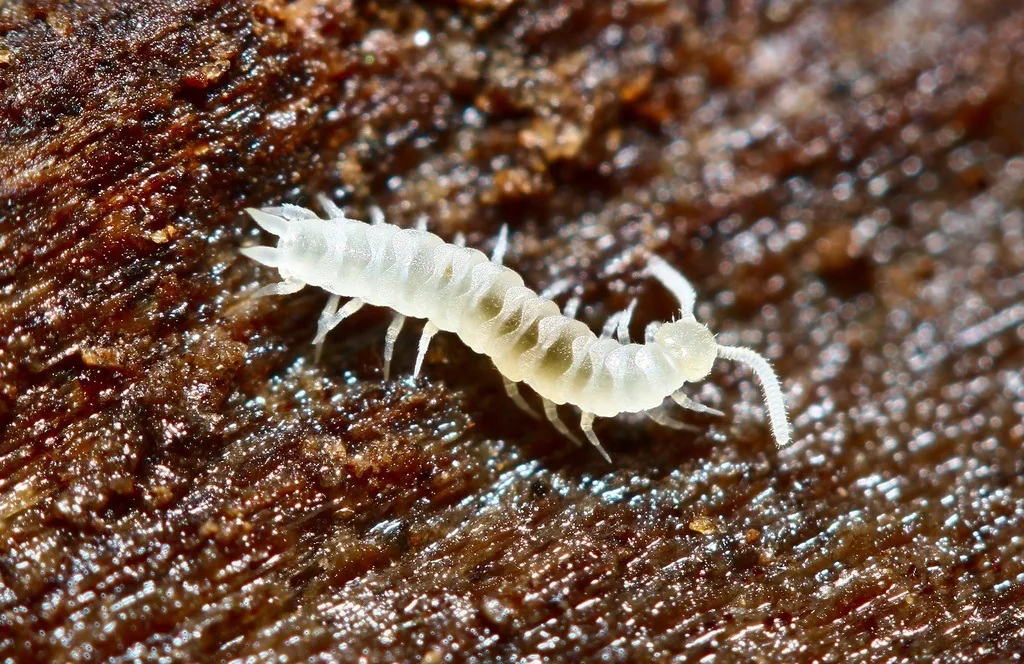
How to identify it
Where it lives
They're associated mainly with moist, organically rich soil.[1]
Biology and life cycle
They feed on decaying as well as living plant material in the soil.[1]
Damage and signs
Health risk
They feed on roots and organic matter; UC IPM mentions no risk to people.[1]
Control
Prevention
Garden symphylans are difficult to manage; flooding for three weeks can help where the soil holds water.[1]
Traps and physical control
Rototilling dry soil vigorously just before planting may reduce numbers by abrading their soft bodies.[1]
Common questions
Sources
- University of California Statewide IPM Program, “Garden Symphylans (Pests in Gardens and Landscapes).” ipm.ucanr.edu/PMG/GARDEN/VEGES/PESTS/gardensymphylans.html (accessed 2026-10-06)
- iNaturalist, “Scutigerellidae taxon page (order and family).” www.inaturalist.org/taxa/185594 (accessed 2026-10-06)