Pest profile

Giant Water Bugs

Belostomatidae (Lethocerus, Abedus, Belostoma) · Hemiptera: Belostomatidae[2]

Giant water bugs, nicknamed electric light bugs, are big aquatic predators that swarm to lights during mating flights and can bite painfully.[1]

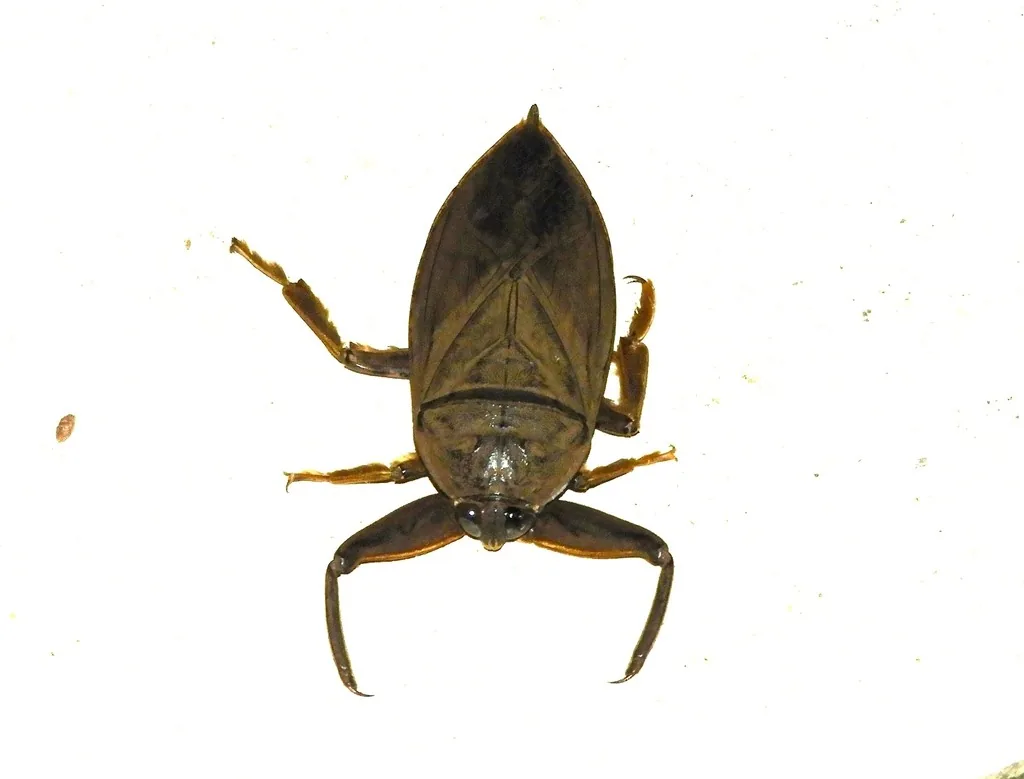
Giant water bug, a large flat brown aquatic bug with grasping front legs, on a white surface
Giant water bug, a large flat brown aquatic bug with grasping front legs, on a white surface. (c) Francisco Farriols Sarabia, some rights reserved (CC BY) — via iNaturalist, CC BY 4.0

How to identify it

  • They're the largest true bugs; some South American species reach 4 inches.[1]
  • They hang below the water surface, breathing through two siphon-like appendages at the tail.[1]
  • In Abedus and Belostoma, females glue eggs onto the males' backs.[1]

Where it lives

Species range across much of North America; Belostoma flumineum, for example, occurs from Quebec and New England west to Manitoba and south to Florida and Arizona.[1]

US map: public records from 47 states since 1990 (GBIF).

Biology and life cycle

They live in ponds and ditches and fly between waters in mating season, when they come to lights in large numbers.[1]

Eggs hatch in one to two weeks.[1]

Damage and signs

  • They prey on aquatic insects, small fish, frogs and tadpoles, injecting powerful enzymes.[1]

Health risk

They can inflict a painful bite with their strong beak and pinch with their front legs; handle with care.[1]

Control

Prevention

They're attracted to lights during mating flights; reducing outdoor lighting near water may reduce visits.[1]

Common questions

What's the huge bug that flew to my porch light?
Possibly a giant water bug, also called an electric light bug.[1]
Do giant water bugs bite?
Yes, they can give a painful bite if handled.[1]

Sources

  1. University of Florida IFAS Extension (Featured Creatures), “Giant Water Bugs, Electric Light Bugs (EENY-301).” edis.ifas.ufl.edu/publication/IN578 (accessed 2026-10-06)
  2. iNaturalist, “Belostomatidae taxon page (order and family).” www.inaturalist.org/taxa/81570 (accessed 2026-10-06)

Updated 2026-10-14. Built from sourced records. Spot an error? Tell us.