Pest profile

Giant Whitefly

Aleurodicus dugesii · Hemiptera: Aleyrodidae[2]

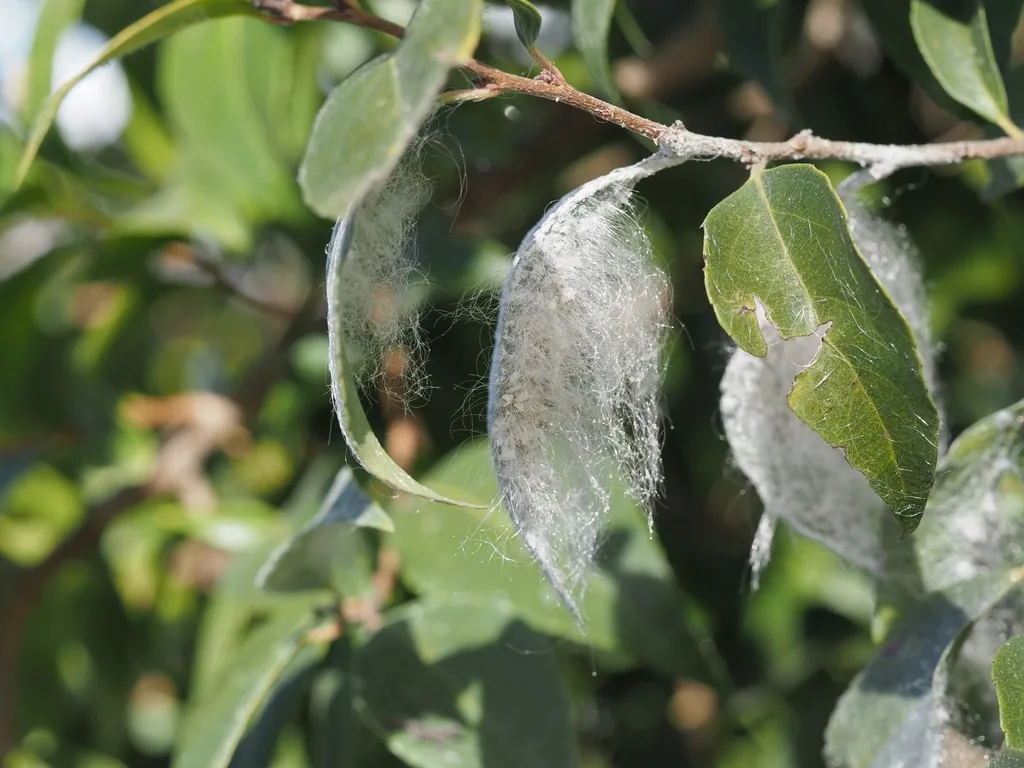
Giant whitefly is a large whitefly that leaves long, beard-like strands of wax under the leaves of many ornamentals.[1]

Giant whitefly infestation, leaves hung with long white wax strands on their undersides
Giant whitefly infestation, leaves hung with long white wax strands on their undersides. (c) Aiver, some rights reserved (CC BY) — via iNaturalist, CC BY 4.0

How to identify it

  • Adults are up to 3/16 inch long, large for a whitefly, with mottled gray wing patterns.[1]
  • Adults lay eggs in spirals of wax on leaf undersides; nymph wax filaments often reach 2 inches and can top 10 inches out of the wind.[1]

Where it lives

Native to Mexico, it reached Texas in 1991 and is established in California, Arizona, Florida, Louisiana and Hawaii.[1]

US map: states named in the cited source.

Biology and life cycle

Life stages are egg, four nymph stages and a winged adult, mostly on leaf undersides.[1]

Adults feed in groups and most stay on the plant where they emerged, so infestations cluster.[1]

Damage and signs

  • Heavy feeding causes early leaf aging, leaf drop and dieback but rarely kills plants; honeydew grows sooty mold.[1]
  • Hosts include begonia, hibiscus, bird of paradise, orchid tree, banana, mulberry, xylosma and some citrus and avocado.[1]

Health risk

It feeds on plants; UC IPM mentions no risk to people.[1]

Control

Sanitation

Remove infested leaves early, seal them in plastic bags and take them off the property.[1]

Traps and physical control

A strong stream of water on leaf undersides, weekly when numbers are high, worked as well as several insecticides in comparisons.[1]

Biological control

Introduced parasitic wasps are now established and often cut numbers sharply, so buying and releasing more isn't needed.[1]

Pesticides

Insecticides generally aren't recommended because they kill those wasps; if used, choose insecticidal soap or oil.[1]

Common questions

What's the white hairy fuzz under my hibiscus leaves?
It's likely giant whitefly nymph wax, which can be mistaken for a fungus.[1]
Does hosing off whiteflies really work?
Yes; UC IPM reports water sprays controlled giant whitefly as well or better than several chemical treatments.[1]

Sources

  1. University of California Statewide IPM Program, “Giant Whitefly (Pest Notes).” ipm.ucanr.edu/home-and-landscape/giant-whitefly/ (accessed 2026-10-06)
  2. iNaturalist, “Aleurodicus dugesii taxon page (order and family).” www.inaturalist.org/taxa/367947 (accessed 2026-10-06)

Updated 2026-10-14. Built from sourced records. Spot an error? Tell us.