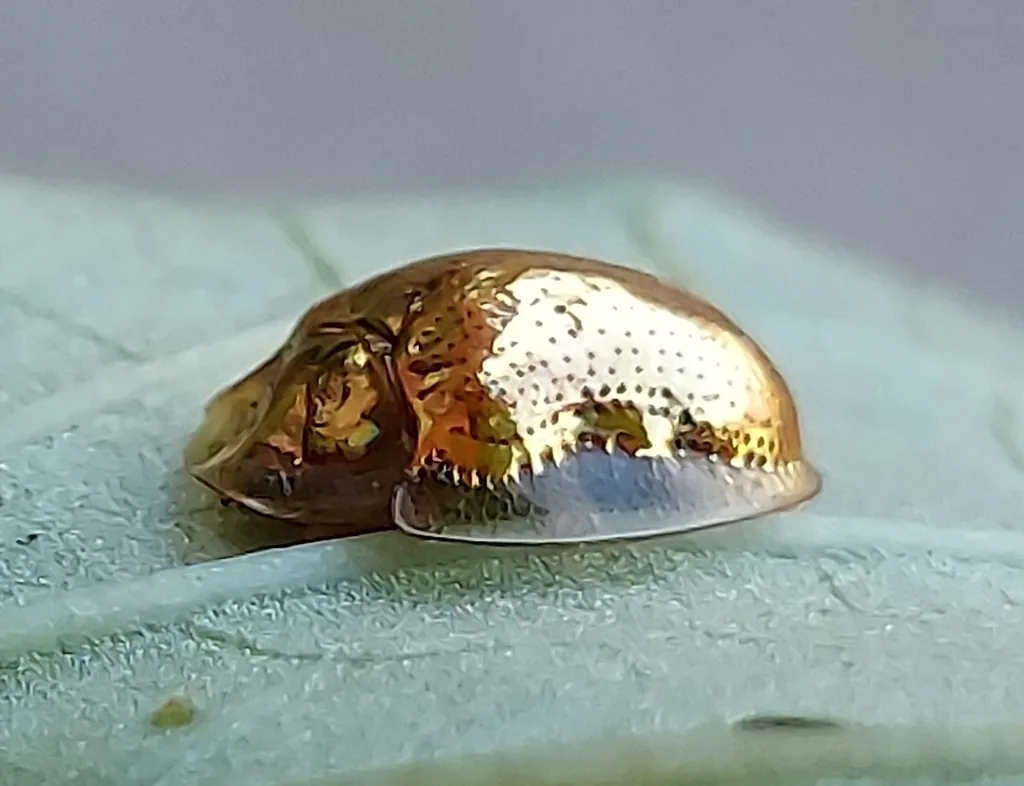
How to identify it
Where it lives
It's widespread in eastern North America, west to about Iowa and Texas.[1]
Biology and life cycle
In northern states there's usually one generation a year; beetles appear in May or June.[1]
Damage and signs
- Adults and larvae chew small to medium holes, mostly from leaf undersides; they're rarely abundant enough to cause damage.[1]
Health risk
It feeds on plants in the morning glory family; UF/IFAS mentions no risk to people.[1]
Control
Prevention
Control is rarely warranted.[1]
Common questions
Sources
- University of Florida IFAS Extension (Featured Creatures), “Golden Tortoise Beetle, Charidotella bicolor (EENY-014).” edis.ifas.ufl.edu/publication/IN140 (accessed 2026-10-06)
- iNaturalist, “Charidotella sexpunctata taxon page (order and family).” www.inaturalist.org/taxa/133439 (accessed 2026-10-06)