Pest profile

Green Fruitworms

Orthosia hibisci, Lithophane antennata, Lithophane unimoda · Lepidoptera: Noctuidae[2]

Green fruitworms are three caterpillar species that cause deep, sunken pits in young apples, plums, peaches and pears.[1]

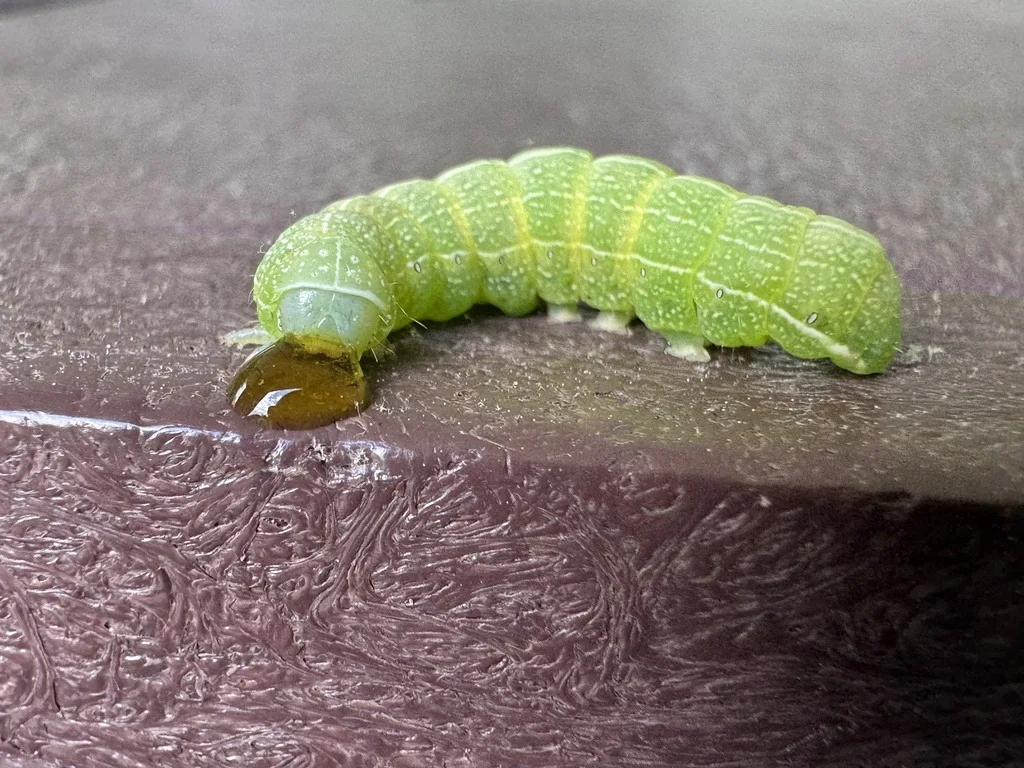
Speckled green fruitworm caterpillar, bright green with pale stripes along the back and sides
Speckled green fruitworm caterpillar, bright green with pale stripes along the back and sides. (c) Sinéad Tuttle-Lerner, some rights reserved (CC BY) — via iNaturalist, CC BY 4.0

How to identify it

  • Larvae are green with many white or blue flecks, a thin pale stripe down the back and a wider stripe on each side.[1]
  • Full-grown larvae are robust, 1 1/4 to 1 1/2 inches long; adults are light brown moths about an inch long with mottled forewings.[1]

Where it lives

In Kentucky three species occur, and UK Extension treats them as one pest because damage and biology are alike.[1]

US map: public records from 43 states since 1990 (GBIF).

Biology and life cycle

They overwinter as pupae in the ground, and moths lay single eggs on small branches near leaf scars around green tip.[1]

Larvae feed on leaves, then buds and blooms, and move to fruit shortly after petal fall; there's one generation a year.[1]

Damage and signs

  • Most damaged fruit falls by early June; fruit that stays on the tree shows large, sunken, corky wounds at harvest.[1]

Health risk

It feeds on plants; UK Extension mentions no risk to people.[1]

Control

Prevention

Between pink and first cover, check 10 fruit clusters on each of 10 trees; treat if 2 or more of the 100 clusters are infested.[1]

Biological control

Sprays containing Bacillus thuringiensis control these caterpillars, and prebloom sprays work best.[1]

Common questions

What caused the corky, sunken scars on my apples?
Green fruitworm feeding on young fruit is one cause of large sunken, corky wounds at harvest.[1]
Why do so many small apples drop in late spring?
Fruit damaged by green fruitworms mostly falls to the ground by early June.[1]

Sources

  1. University of Kentucky Entomology (ENTFACT), “Green Fruitworms (ENTFACT-214).” entomology.mgcafe.uky.edu/ef214 (accessed 2026-10-06)
  2. iNaturalist, “Orthosia hibisci taxon page (order and family).” www.inaturalist.org/taxa/226646 (accessed 2026-10-06)

Updated 2026-10-14. Built from sourced records. Spot an error? Tell us.