🌲 Hemlock Woolly Adelgid

Adelges tsugae Β· Hemiptera: Adelgidae

Hemlock woolly adelgid has killed millions of eastern hemlock trees since arriving from Asia in the 1950s. Identifying it early gives you time to treat and save valuable hemlocks.

InvasiveHemlockForest PestAdelgidaeWhite WoolEastern US
🌲
Risk Level
Forest Pest
πŸ“ FIELD GUIDE ILLUSTRATION
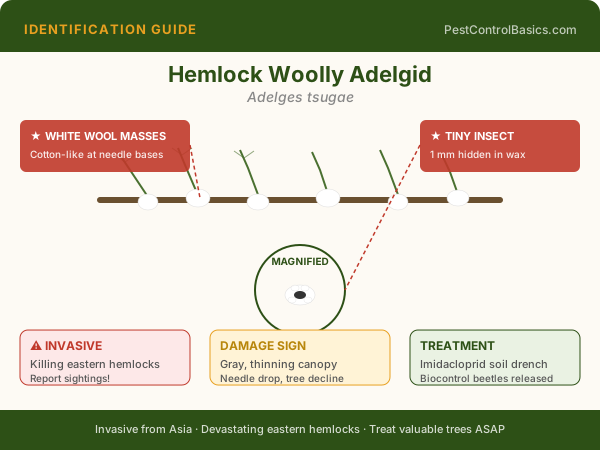
Hemlock Woolly Adelgid identification illustration with labeled anatomical features β€” PestControlBasics.com

Original illustration by PestControlBasics.com. Use anatomical labels above to confirm your identification. For photo references, see the identification section below.

πŸ”¬
PestControlBasics Editorial Team
Reviewed by Derek Giordano Β· Updated 2026

πŸ” Identification

The insect itself is tiny (0.8mm) and rarely seen directly. ID is by the distinctive white woolly egg sacs β€” small cottony white tufts found at the base of hemlock needles on the underside of branches. These look like tiny styrofoam beads attached to the needle base, visible from late fall through spring. Active infestation turns needles gray-green then causes them to drop.

🧬 Biology & Behavior

Invasive from Asia; established in eastern US from Maine to Georgia; killing eastern hemlocks along stream corridors and in forest understories. Two generations per year: sistens generation (overwinters as adult on tree) and progrediens generation (spring). Trees can die within 4-10 years of first infestation without treatment.

⚠️ Damage & Health Risk

Needle drop and branch dieback; tree death within 4-10 years; loss of hemlock-dominated riparian corridors and forest understory; loss of hemlock's ecological role (stream cooling, winter deer habitat, specialized bird and insect associations).

πŸ”§ DIY Treatment

Systemic imidacloprid soil drench (most common) or trunk injection by certified arborist. Dinotefuran bark spray (faster uptake than soil drench β€” useful for rapidly declining trees). Horticultural oil or insecticidal soap for light infestations as a temporary measure. Treatment must be annual or biennial β€” it controls but does not eradicate.

πŸ‘· When to Call a Pro

Certified arborist trunk injection of imidacloprid (Mauget capsule system) provides 5-7 year protection and is preferred for streamside trees where soil drench might affect waterways.

❓ FAQ

How do I know if my hemlock has woolly adelgid?
Look at the underside of branch tips in fall through spring: if you see tiny white woolly tufts at the base of the needles, that's hemlock woolly adelgid. Fresh infestations show white wool; older egg sacs turn tan/brown. Healthy hemlocks have dark green needles; adelgid-stressed hemlocks show gray-green to yellow needles and needle drop.
Can I save my hemlock from woolly adelgid?
Yes β€” if treated before severe decline. Imidacloprid soil drench or trunk injection provides excellent control. Trees with less than 30% dieback respond well to treatment. Trees with significant crown dieback can recover but may take several years of treatment to fully rebound.
🧪 Recommended Treatment Products
Imidacloprid (Systemic) Horticultural Oil Copper Fungicide
Full product guides with mixing rates and safety info. → Browse All 130 Pesticide Guides
🔗 Related Pests
Bagworm Pine Processionary Pine Sawfly Pine Cone Moth Pine Bark Adelgid
Compare similar pests to confirm your identification. → Use our ID Flowchart
πŸ“š Sources: EPA Safe Pest Control Β· NPMA Pest Guide
Published: Jan 1, 2025 Β· Updated: Apr 7, 2026

πŸ—ΊοΈ US Distribution β€” Hemlock Woolly Adelgid

image/svg+xml
Common Occasional Not Present
States Present
49
Occasional
2
Primary Region
Continental US
πŸ“Š Source: University extension services, USDA, CDC vector data, and published entomological surveys.