Pest profile

Hickory Horned Devil

Citheronia regalis · Lepidoptera: Saturniidae[2]

Despite long orange, black-tipped horns, the hickory horned devil caterpillar is harmless.[1]

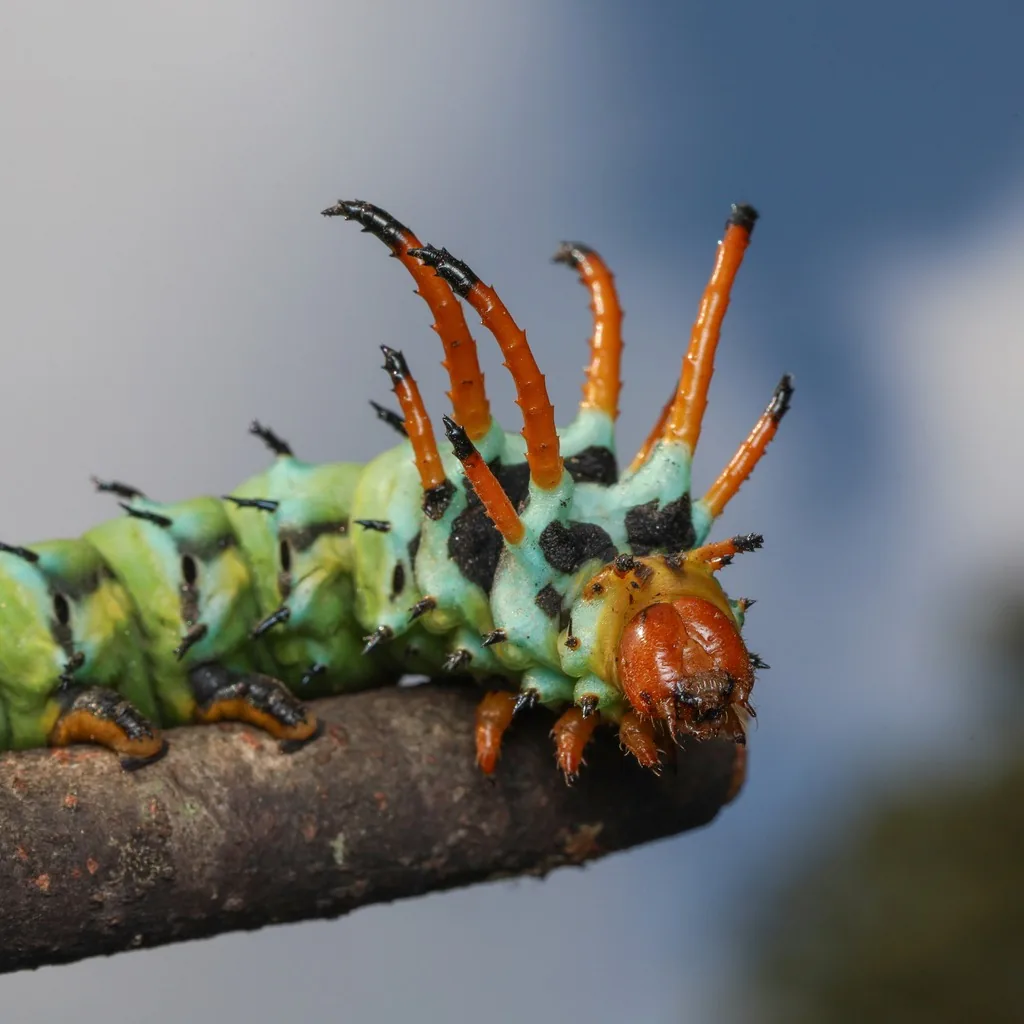
Hickory horned devil caterpillar, large and green with long orange black-tipped horns, on a twig
Hickory horned devil caterpillar, large and green with long orange black-tipped horns, on a twig. (c) Adrienne van den Beemt, some rights reserved (CC BY) — via iNaturalist, CC BY 4.0

How to identify it

  • Thoracic segments carry long and short orange, black-tipped spiny horns; abdominal segments have short black spines and pale oblique stripes.[1]
  • It becomes the regal moth, also called the royal walnut moth.[1]

Where it lives

The regal moth lives in eastern deciduous forests from New Jersey to Missouri and south to eastern Texas and central Florida, more common in the south.[1]

US map: public records from 24 states since 1990 (GBIF).

Biology and life cycle

It typically has one generation a year.[1]

Damage and signs

  • Larvae feed on walnut, butternut, hickories including pecan, persimmon and sweetgum.[1]

Health risk

Although it looks fierce, the larva is harmless.[1]

Control

Prevention

No control is needed; despite its fierce look the caterpillar is harmless.[1]

Common questions

Is the giant horned caterpillar dangerous?
No; the hickory horned devil is harmless despite its look.[1]
What does it turn into?
The regal moth, or royal walnut moth.[1]

Sources

  1. University of Florida IFAS Extension (Featured Creatures), “Hickory Horned Devil, Regal Moth, Citheronia regalis (EENY-052).” edis.ifas.ufl.edu/publication/IN209 (accessed 2026-10-06)
  2. iNaturalist, “Citheronia regalis taxon page (order and family).” www.inaturalist.org/taxa/81586 (accessed 2026-10-06)

Updated 2026-10-14. Built from sourced records. Spot an error? Tell us.