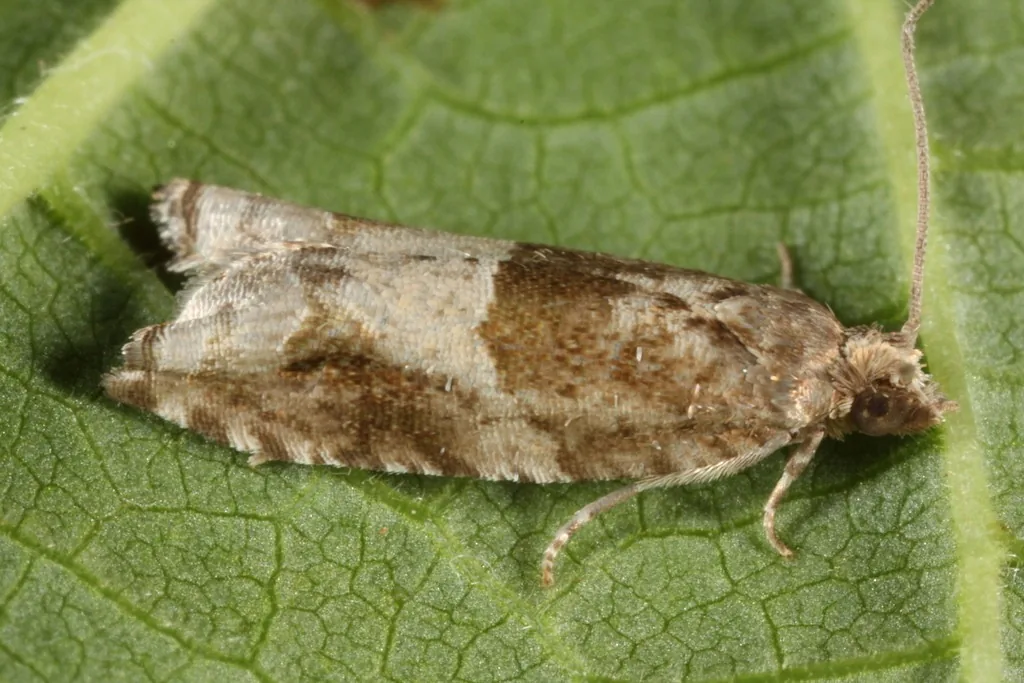
How to identify it
Where it lives
The PNW Insect Management Handbook covers it on landscape holly and in commercial holly orchards; it also feeds on cranberry, blueberry, apple and cherry.[1]
Biology and life cycle
Overwintering eggs hatch in spring; larvae feed first on buds, then roll leaves and hold them with webbing.[1]
Mature larvae drop to pupate in the duff; second-generation females lay single eggs under leaves, and those larvae appear by late July.[1]
There are two generations a year.[1]
Damage and signs
- Rolled, webbed leaves leave distorted tip growth, though in landscapes natural enemies usually keep the damage barely noticeable.[1]
Health risk
It feeds on plants; the PNW Insect Management Handbook mentions no risk to people.[1]
Control
Prevention
Watch new growth as it starts, when larvae begin tying leaves together.[1]
Traps and physical control
Hand-pick larvae in rolled leaves; once larvae are established and before they pupate, shear trees and hedges and destroy the clippings.[1]
Pesticides
Don't spray holly in bloom; the handbook times any insecticide for when new growth is about 1/4 inch long, before blossoms open.[1]
Common questions
Sources
- Pacific Northwest Pest Management Handbooks (OSU, WSU, University of Idaho), “Holly (Ilex): Holly bud moth (Insect Management Handbook).” pnwhandbooks.org/insect/hort/landscape/hosts-pests-landscape-plants/holly-ilex-holly-bud-moth (accessed 2026-10-06)
- iNaturalist, “Rhopobota naevana taxon page (order and family).” www.inaturalist.org/taxa/324275 (accessed 2026-10-06)