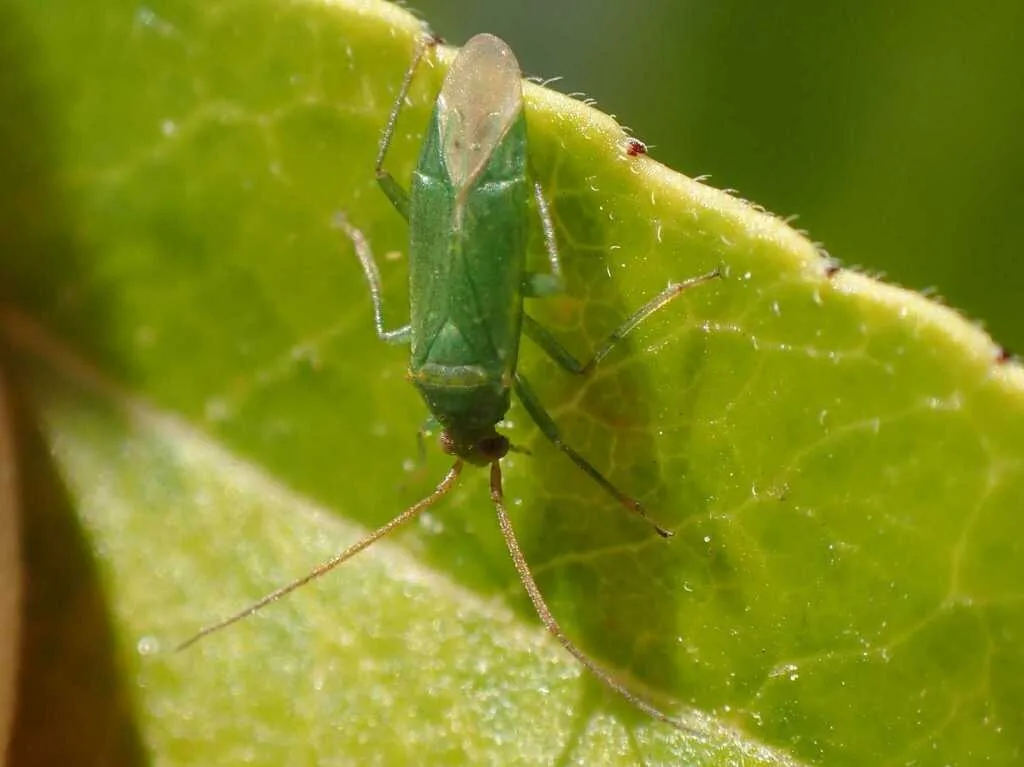
How to identify it
Look-alikes
| Look-alike | How to tell them apart |
|---|---|
| Herbicide injury | Plant bug damage shows on new leaves all over the tree; herbicide injury only on the sprayed side.[1] |
Where it lives
It feeds on honeylocust, especially trees in sunny, exposed spots, yellow-leaved varieties and recent transplants.[1]
Biology and life cycle
Eggs overwinter under twig bark and hatch as buds open; nymphs feed until June.[1]
There's one generation a year, and adults are rarely seen after late July.[1]
Damage and signs
- Feeding stipples leaves, which stay small, twisted and dwarfed; severe damage can drop leaves on young trees.[1]
Health risk
It feeds on honeylocust only; Minnesota Extension mentions no risk to people.[1]
Control
Prevention
Keep trees healthy and tolerate the damage; it's usually cosmetic.[1]
Pesticides
Where damage has been heavy, insecticidal soap at bud break, sprayed under the leaves, works on nymphs.[1]
When to call a professional
For large trees, consider hiring a tree care professional.[1]
Common questions
Sources
- University of Minnesota Extension, “Honeylocust plant bugs (Yard and garden insects).” extension.umn.edu/garden-and-home/yard-and-garden/yard-and-garden-insects/honeylocust-plant-bugs (accessed 2026-10-06)
- iNaturalist, “Blepharidopterus chlorionis taxon page (order and family).” www.inaturalist.org/taxa/900581 (accessed 2026-10-06)