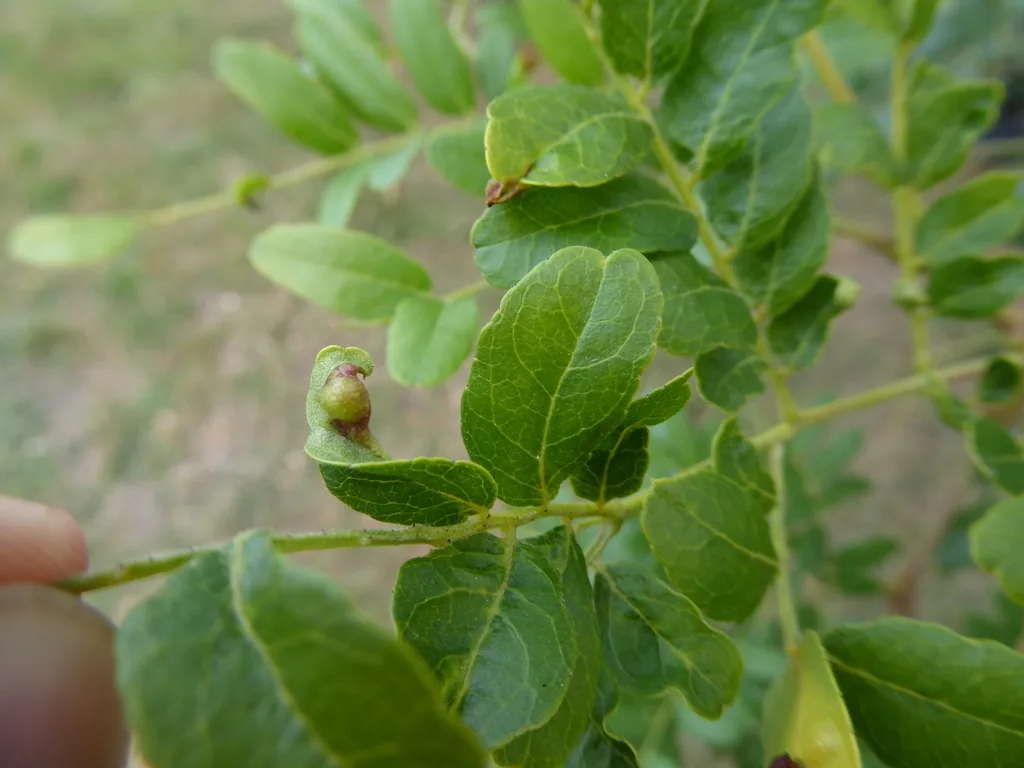
How to identify it
Where it lives
CSU Extension covers it as a common pest of honeylocust in Colorado; all common honeylocust varieties appear susceptible.[1]
Biology and life cycle
It has several generations a year, about three to four weeks apart, from first shoot growth through midsummer.[1]
When new growth stops, adults apparently go dormant until the next spring.[1]
Damage and signs
- Heavy infestations can temporarily destroy all new growth, but already-expanded leaflets aren't hurt.[1]
Health risk
It feeds on plants; CSU Extension mentions no risk to people.[1]
Control
Biological control
Severe weather, predatory plant bugs and a small parasitic wasp help, and outbreaks often collapse when new growth stops.[1]
Pesticides
Chemical controls are only moderately effective; sprays during egg laying on the earliest generations matter most.[1]
Common questions
Sources
- Colorado State University Extension, “Insect and Mite Pests of Honeylocust (Fact Sheet 5.571).” extension.colostate.edu/resource/insect-and-mite-pests-of-honeylocust/ (accessed 2026-10-06)
- iNaturalist, “Dasineura gleditchiae taxon page (order and family).” www.inaturalist.org/taxa/367311 (accessed 2026-10-06)