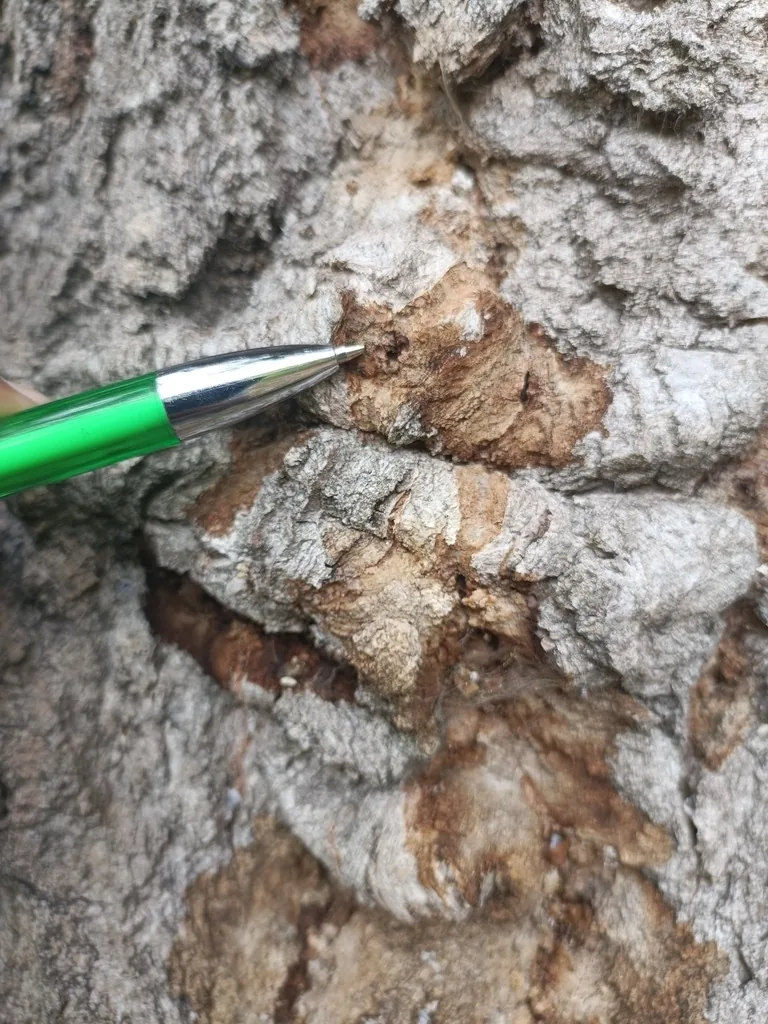
How to identify it
Look-alikes
| Look-alike | How to tell them apart |
|---|---|
| Native ambrosia and bark beetles | Most native look-alikes attack only stressed, injured or dying trees, while invasive shothole borers colonize mostly healthy trees.[1] |
Where it lives
By early 2023 they were in seven Southern California counties, from Santa Barbara and Ventura to San Diego and Riverside.[1]
Biology and life cycle
Females bore galleries, lay eggs and grow the fungus that larvae and adults eat; the beetles don't eat wood.[1]
Development takes 25 to 50 days, and models suggest 5 to 11 generations a year in Southern California.[1]
Damage and signs
Health risk
It attacks trees; UC IPM mentions no risk to people.[1]
Control
Prevention
Monitor host trees regularly for entry holes, and keep trees healthy with good cultural care.[1]
Sanitation
Prune infested branches promptly before beetles reach the trunk, and remove severely infested trees following proper wood-disposal rules.[1]
When to call a professional
Management choices depend on tree species, value, infestation level and hazard; UC IPM's matrix guides when pesticides may fit.[1]
Common questions
- What are the tiny round holes with wet stains on my sycamore?
- They may be invasive shothole borer entry holes, about the size of a ballpoint pen tip.[1]
- Can invasive shothole borers be eradicated?
- UC IPM says eradication is unlikely where established, but consistent management can contain infestations.[1]
Sources
- University of California Statewide IPM Program, “Invasive Shothole Borers (Pest Notes).” ipm.ucanr.edu/home-and-landscape/invasive-shothole-borers/ (accessed 2026-10-06)
- iNaturalist, “Euwallacea fornicatus taxon page (order and family).” www.inaturalist.org/taxa/885742 (accessed 2026-10-06)