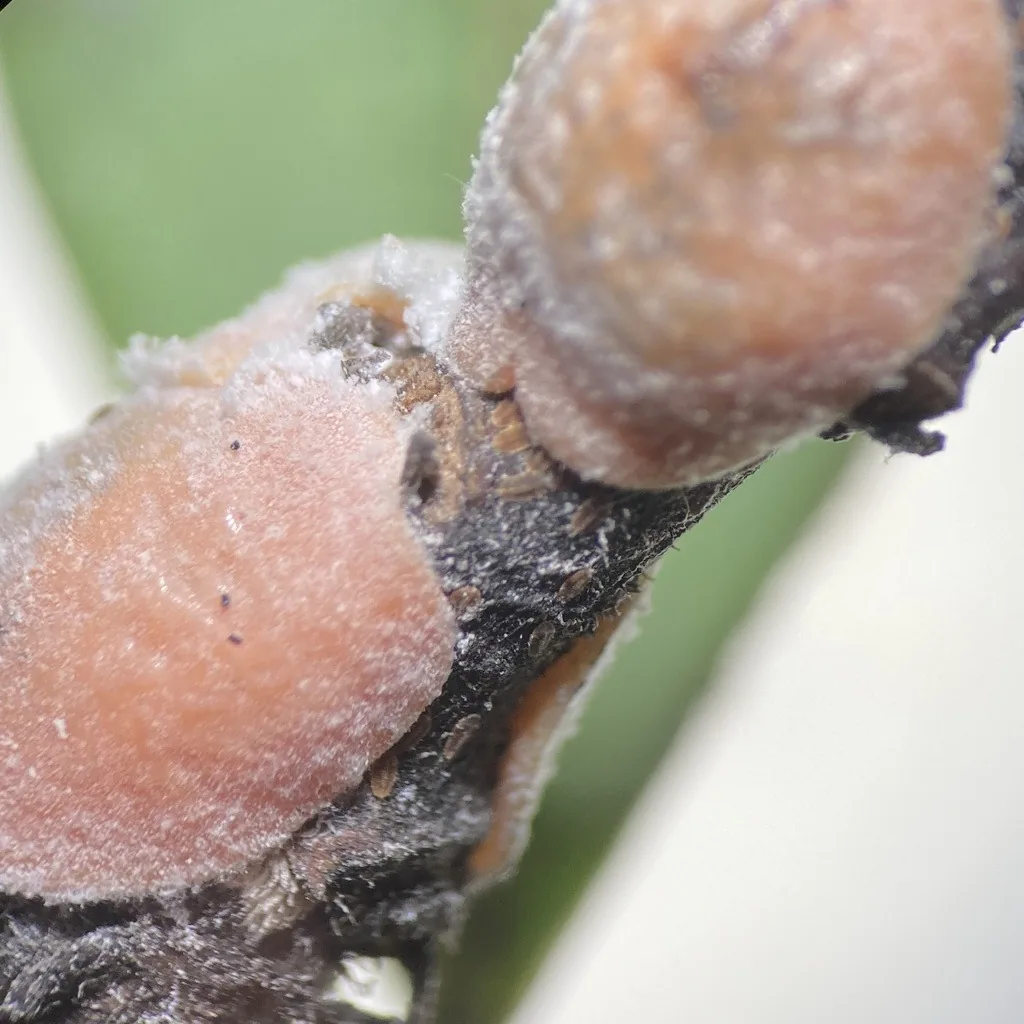
How to identify it
Look-alikes
| Look-alike | How to tell them apart |
|---|---|
| Other scale insects | Scale species differ in timing, so identify the species to know when crawlers are active.[1] |
Where it lives
It feeds only on magnolia.[1]
Biology and life cycle
Nymphs overwinter on one- or two-year-old twigs and mature in late July to early August.[1]
Crawlers hatch in late August or early September; one generation a year.[1]
Damage and signs
- It weakens branches and slows growth; honeydew and sooty mold foul the magnolia and plants below, and heavy infestations can kill branches.[1]
Health risk
Scales feed only on plants; Minnesota Extension mentions no risk to people.[1]
Control
Biological control
Lady beetles and tiny parasitic wasps usually keep scales below damaging numbers.[1]
Pesticides
Populations build fast, so treat the same season you see them; horticultural oil in late fall and early spring smothers overwintering nymphs.[1]
Insecticidal soap or horticultural oil timed to active crawlers has minimal impact on natural enemies.[1]
Common questions
Sources
- University of Minnesota Extension, “Scale insects (Yard and garden insects).” extension.umn.edu/garden-and-home/yard-and-garden/yard-and-garden-insects/scale-insects (accessed 2026-10-06)
- iNaturalist, “Neolecanium cornuparvum taxon page (order and family).” www.inaturalist.org/taxa/507879 (accessed 2026-10-06)