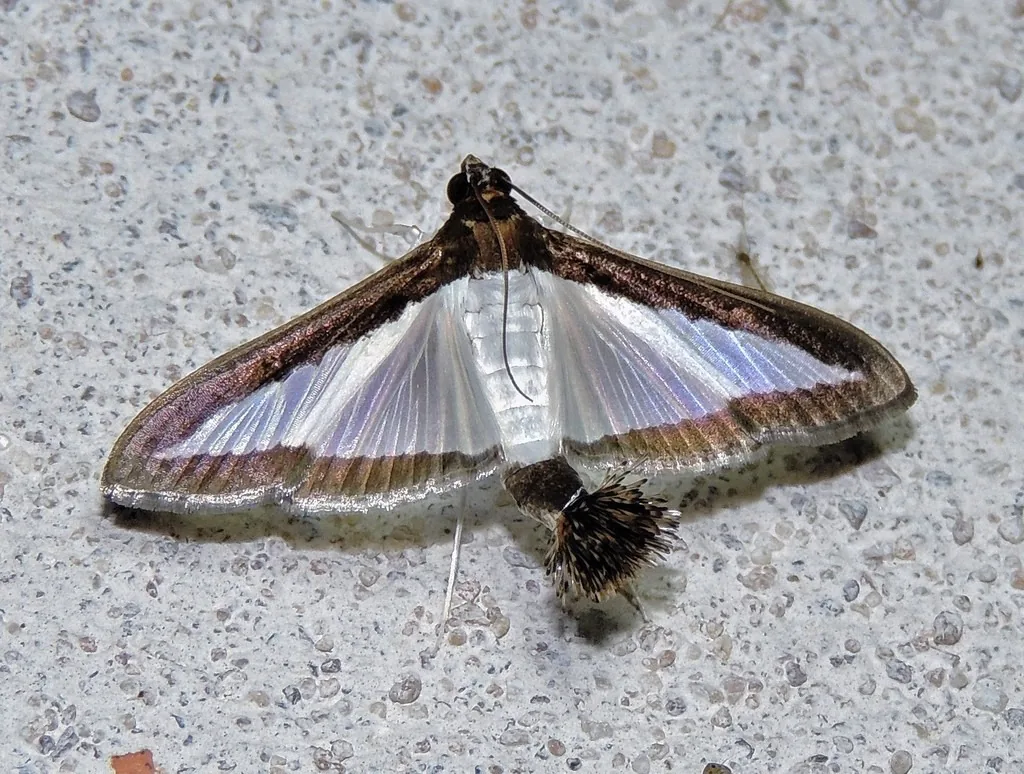
How to identify it
Where it lives
It winters only in south Florida and perhaps south Texas, arriving in north Florida in June and other Southeastern states in July.[1]
Biology and life cycle
It completes its life cycle in about 30 days, with up to three generations before cold weather where it migrates.[1]
Damage and signs
- Larvae mainly eat foliage, leaving lacy leaves; when leaves run out or on less preferred hosts like cantaloupe, they feed on fruit.[1]
Health risk
It feeds on cucurbits; UF/IFAS mentions no risk to people.[1]
Control
Keep them out
Row covers effectively exclude the moths.[1]
Sanitation
Destroy crop residue, which may harbor pupae.[1]
Common questions
Sources
- University of Florida IFAS Extension (Featured Creatures), “Melonworm, Diaphania hyalinata (EENY-163).” edis.ifas.ufl.edu/publication/IN320 (accessed 2026-10-06)
- iNaturalist, “Diaphania hyalinata taxon page (order and family).” www.inaturalist.org/taxa/151769 (accessed 2026-10-06)