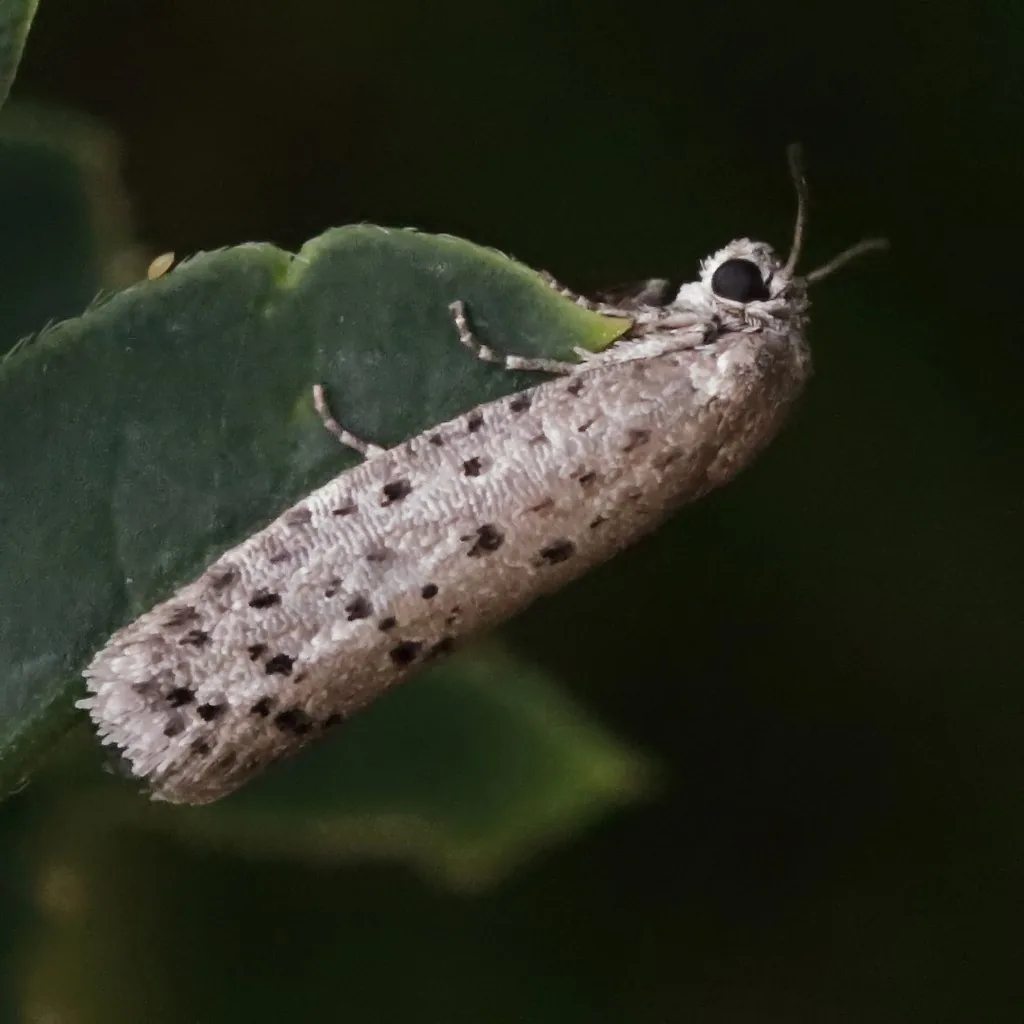
How to identify it
Where it lives
Native to China and Japan, it reached Washington, D.C., in the 1940s and has spread through the eastern US west to Texas and Nebraska.[1]
Biology and life cycle
Pennsylvania has two generations: first-generation larvae feed from late June, second-generation larvae in August and early September.[1]
Larvae spin webs around leaflets and feed inside them.[1]
Damage and signs
Health risk
It feeds on plants; Penn State Extension mentions no risk to people.[1]
Control
Prevention
Plant less susceptible honeylocust cultivars such as 'Moraine', 'Shademaster' or 'Imperial', and clean up webbed debris.[1]
Biological control
Bt applied while caterpillars are small and webbing is light works; avoid broad-spectrum sprays that hit parasitoids.[1]
Common questions
Sources
- Penn State Extension, “Mimosa Webworm.” extension.psu.edu/mimosa-webworm (accessed 2026-10-06)
- iNaturalist, “Homadaula anisocentra taxon page (order and family).” www.inaturalist.org/taxa/416957 (accessed 2026-10-06)